
"Sonnet pour Larisa" – 4094 rezultate
0.02 secundeMeilisearch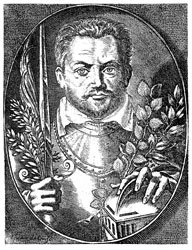 ML
MLMarc de Papillon de Lasphrise
Marc Papillon, seigneur de Lasphrise, dit aussi le Capitaine Lasphrise et parfois nommé Marc de Papillon, né près d'Amboise vers 1555 et mort vers 1599, est un poète baroque satirique et érotique français. Biographie Issu d'une famille méridionale appauvrie par les guerres, orphelin de père, il s'engagé très jeune dans les armées catholiques. Il fait de nombreux séjours à la Cour avant de se retirer à Lasphrise, près de Tours, vers 1587. Amoureux peu soucieux des tabous et des conventions, il reste le poète des Amours de Théophile, composées en l'honneur d'une religieuse [1], et de L'Amour passionnée de Noémie, composé pour une cousine, Noémie-la-Tourangelle, remarquables par leur ton libertin. Il y montre un souci de recherches formelles, ainsi qu'un goût prononcé pour le jeu avec la langue, comme ce sonnet « en langage enfançon » et cet autre « en langue inconnue » qui commence ainsi : Cerdis Zerom deronty toulpinye, Pursis harlins linor orifieux... Il est aussi l'auteur d'une...
1 poezii, 0 proze
 JT
JTJacques Tahureau
Jacques Tahureau Écrivain français (Le Mans 1527 – v. 1555). Il prit part aux guerres d\'Italie ; de retour en France, il se lia d\'amitié avec J.-A. de Baïf et se familiarisa, grâce à ce dernier, avec la doctrine et la pratique de la jeune école de la Pléiade. Il mourut l\'année même de son mariage, en 1555. Il avait, en 1554, édité un recueil de poèmes pétrarquisants, les Sonnets, Odes et Mignardises amoureuses de l\'Admirée. Mais ce sont les Dialogues, publiés après sa mort en 1565, qui constituent la part de son œuvre la plus originale. S\'inspirant du philosophe grec Démocrite, il s\'y livre, au nom de la raison, à une critique systématique et impitoyable de toutes les « folies » humaines : après celle de l\'amour (à quoi est consacrée la plus grande partie du Premier Dialogue) vient celle des diverses impostures dont se sont rendus coupables au cours de l\'Histoire les nobles, les hommes de loi, les médecins, les astrologues, les alchimistes, et, pour finir, ceux qu\'il appelle...
1 poezii, 0 proze
 WW
WWWilliam Wordsworth
William Wordsworth was born on April 17, 1770 in Cockermouth, Cumberland, in the Lake District. His father was John Wordsworth, Sir James Lowther\'s attorney. The magnificent landscape deeply affected Wordsworth\'s imagination and gave him a love of nature. He lost his mother when he was eight and five years later his father. The domestic problems separated Wordsworth from his beloved and neurotic sister Dorothy, who was a very important person in his life. With the help of his two uncles, Wordsworth entered a local school and continued his studies at Cambridge University. Wordsworth made his debut as a writer in 1787, when he published a sonnet in The European Magazine . In that same year he entered St. John\'s College, Cambridge, from where he took his B.A. in 1791. During a summer vacation in 1790 Wordsworth went on a walking tour through revolutionary France and also traveled in Switzerland. On his second journey in France, Wordsworth had an affair with a French girl, Annette...
16 poezii, 0 proze
 MS
MSMaurice Scève
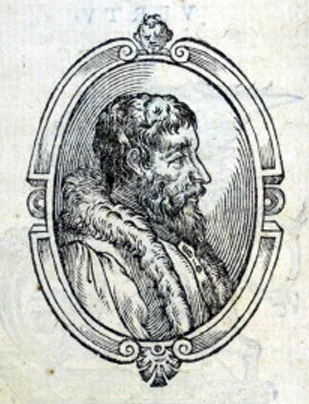
Maurice Scève (1501-1564?), représentant le plus illustre de l\'école lyonnaise, est né à Lyon, entre 1500 et 1505, dans une famille bourgeoise qui joue un rôle honorable dans la vie de la cité. Son existence reste mal connue. Il reçoit une solide formation intellectuelle. Peut-être devient-il docteur en droit. Vers 1530, il est en Avignon attaché au vicaire de l\'Archevêque. En 1533, il prend part aux recherches qui tentent de retrouver le tombeau de la mythique Laure, la dame que Pétrarque avait aimée et chantée dans son Canzoniere, morte en Avignon lors de la peste de 1348. Il y découvre un sonnet qu\'il attribue à Pétrarque. Cette trouvaille lui vaut la célébrité, et les félicitations du roi François Ier, lui même grand amateur de poésie pétrarquiste. De retour à Lyon, Scève fréquente les cercles cultivés et connaît les milieux néo-latins où s\'épanouisse le sodalitium lugdunense. En 1535, Scève fait la connaissance d\'Étienne Dolet et lui donne à imprimer son premier ouvrage, La...
6 poezii, 0 proze
 GN
GNGermain Nouveau
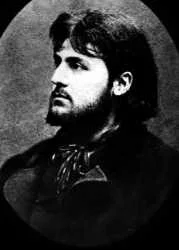
Germain Nouveau est l'aîné des 4 enfants de Félicien Nouveau (1826-1884) et de Marie Silvy (1832-1858). Germain Nouveau perd sa mère alors qu'il n'a que sept ans. Il est élevé par son grand-père. Après une enfance à Aix-en-Provence et des études qu'il effectue au petit séminaire, pensant même à embrasser la prêtrise, et après une année d’enseignement au lycée de Marseille en 1871-1872, Nouveau s'installe à Paris à l’automne 1872. Il publie son premier poème, "Sonnet d’été", dans La Renaissance artistique et littéraire, revue d’Émile Blémont et fait connaissance de Mallarmé, de Jean Richepin et les « Vivants » (Ponchon…) qui se réunissent au café Tabourey. Il fréquente aussi les zutistes, fait la connaissance de Charles Cros avec lequel il collabore à la rédaction des Dixains réalistes qui tournent en dérision les parnassiens. Il découvre dans l’Album zutique les poèmes laissés par Rimbaud et Verlaine, qui ont quitté la capitale depuis juillet 1872. Arthur Rimbaud, Paul Verlaine,...
7 poezii, 0 proze
Thomas Gray
1716–71, English poet. He was educated at Eton and Peterhouse, Cambridge. In 1739 he began a grand tour of the Continent with Horace Walpole. They quarreled in Italy, and Gray returned to England in 1741. He continued his studies at Cambridge, and he remained there for most of his life, living in seclusion, studying Greek, and writing. In 1768 he was made professor of history and modern languages, but he did no real teaching. Although he was reconciled with Walpole, and formed other close relationships in his lifetime, his shy and sensitive disposition was ill adapted to the robust century in which he lived. He was offered the laureateship in 1757 but refused it. His first important poems, written in 1742, include “To Spring,” “On a Distant Prospect of Eton College,” and a sonnet on the death of his close friend Richard West. After years of revision he finished his great “Elegy Written in a Country Churchyard” (1751), a meditative poem presenting thoughts conjured up by the sight of a...
1 poezii, 0 proze
Tanase Claudiu
Nu am timp acum.
1 poezii, 0 proze
 RB
RBRupert Chawner Brooke
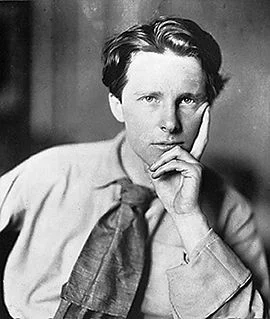
Rupert Chawner Brooke (middle name sometimes given as Chaucer)(3 August 1887–23 April 1915) was an English poet known for his idealistic war sonnets written during the First World War (especially The Soldier); however, he never experienced combat at first hand. He was also known for his boyish good looks, which prompted the Irish poet William Butler Yeats to describe him as \"the handsomest young man in England\". English poet Brooke was born at 5 Hillmorton Road in Rugby, Warwickshire, the second of the three sons of William Parker Brooke, a Rugby schoolmaster, and Ruth Mary Brooke, née Cotterill. He attended Hillbrow Prep School before being educated at Rugby School. While travelling in Europe, he prepared a thesis entitled \"John Webster and the Elizabethan Drama\", which won him a scholarship to King\'s College, Cambridge, where he became a member of the Cambridge Apostles, helped found the Marlowe Society drama club and acted in plays including the Cambridge Greek Play. Brooke...
7 poezii, 0 proze
 TB
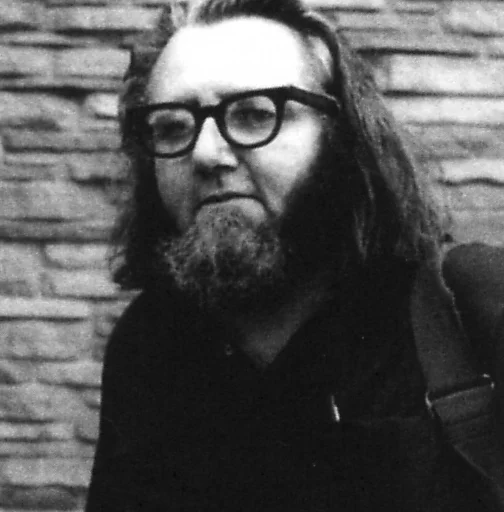
TBTed Berrigan
A fost unul dintre cei mai importanți poeți ai generației lui, faimos nu numai pentru scrisul său invocator din The Sonnets (1964) dar și pentru poeziile sale lirice ulterioare. A fost un profesor și un model pentru mulți poeți, în diferite universități, cât și în casa lui din Manhattan s Lower East Side. A murit la 4 iulie 1983. *** Ted Berrigan (15 November 1934 – 4 July 1983) was an American poet. Berrigan was born in Providence, Rhode Island, on November 15, 1934. After high school, he spent a year at Providence College before joining the U.S. Army in 1954 to serve in the Korean War. After three years in the Army, he finished his college studies at the University of Tulsa in Oklahoma, where he received a B.A. in English in 1959. He received his M.A. from Tulsa in 1962. Berrigan was married to Sandy Berrigan, also a poet, and they had two children, David Berrigan and Kate Berrigan. He and his second wife the poet Alice Notley were active in the poetry scene in Chicago for several...
3 poezii, 0 proze
 EB
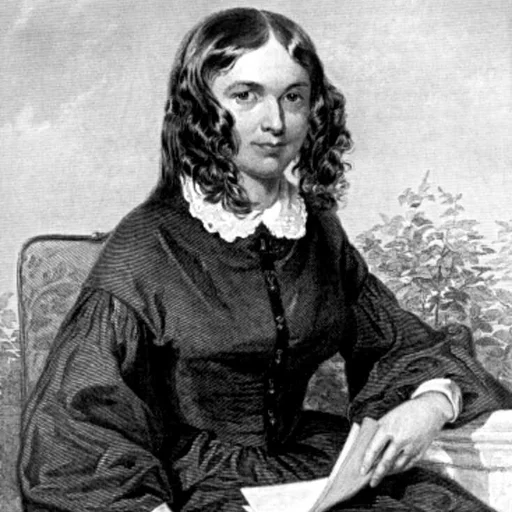
EBElizabeth Barret Browning
Naștere – 6 martie 1806 Kelloe, lângă Durham, Anglia Deces – 29 iunie 1861 (la 55 de ani) Florența, Italia Elizabeth Barrett Browning (n. 6 martie 1806 - d. 29 iunie 1861) a fost o poetă engleză. A scris versuri de o deosebită sensibilitate dedicate soțului ei, poetul Robert Browning. Opera 1847: Sonete din parte portughezei ("Sonnets from the Portuguese"); 1851: Ferestrele casei Guidi ("Casa Guidi Window"); 1860: Poeme înainte de Congres ("Poems Before Congress"); 1857: Aurora Leigh ("Aurora Leigh").
1 poezii, 0 proze
Sonnet XXXVIII
de William Shakespeare
How can my Muse want subject to invent, While thou dost breathe, that pour\'st into my verse Thine own sweet argument, too excellent For every vulgar paper to rehearse? O, give thyself the thanks, if...
Sonet XXXVIII
de Cristian Vasiliu
De ce-aș căta în alte locuri muze, Când ce respiri, inspiră al meu vers; Nu merită nectaru-ți de pe buze S-ajungă-n foi de unde fi-va șters. Îți sunt dator dacă am scris ceva Ce stă ‘nainte-ți...
Sonet
de Roxana Cioclu
Sonet Pour elle Picura, se scurge-n visare pocalul De roua, intre aceleasi dimineti Ingramadite…pierd in urma amintirea Nu ma cutremur! Sunt prea ganduri, zeci! Incerc doar sa-mi rotesc privirea Dar...
Sonnet XXVI
de William Shakespeare
Lord of my love, to whom in vassalage Thy merit hath my duty strongly knit, To thee I send this written embassage, To witness duty, not to show my wit: Duty so great, which wit so poor as mine May...
Sonnet XXXVII
de William Shakespeare
As a decrepit father takes delight To see his active child do deeds of youth, So I, made lame by fortune\'s dearest spite, Take all my comfort of thy worth and truth. For whether beauty, birth, or...
Sonnet XLIX
de William Shakespeare
Against that time, if ever that time come, When I shall see thee frown on my defects, When as thy love hath cast his utmost sum, Call\'d to that audit by advised respects; Against that time when thou...
Sonnet LI
de William Shakespeare
Thus can my love excuse the slow offence Of my dull bearer when from thee I speed: From where thou art why should I haste me thence? Till I return, of posting is no need. O, what excuse will my poor...
Sonnet LXVII
de William Shakespeare
Ah! wherefore with infection should he live, And with his presence grace impiety, That sin by him advantage should achieve And lace itself with his society? Why should false painting imitate his...
Sonnet LXXI
de William Shakespeare
No longer mourn for me when I am dead Then you shall hear the surly sullen bell Give warning to the world that I am fled From this vile world, with vilest worms to dwell: Nay, if you read this line,...
Fragments du chanson de Roland
de Ambasada Frantzei
1.Qu\'en douce France s\'en retourne le roi. Son arriere-garde laissera derriere soi. En sera son neveu, le comte Roland, je crois, Et Olivier, le preux et le courtoix. 2.Ami Roland, sonnez de votre...