
"Sonnet L" – 4095 rezultate
0.01 secundeMeilisearch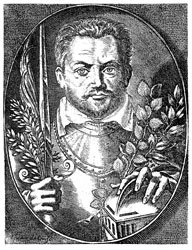 ML
MLMarc de Papillon de Lasphrise
Marc Papillon, seigneur de Lasphrise, dit aussi le Capitaine Lasphrise et parfois nommé Marc de Papillon, né près d'Amboise vers 1555 et mort vers 1599, est un poète baroque satirique et érotique français. Biographie Issu d'une famille méridionale appauvrie par les guerres, orphelin de père, il s'engagé très jeune dans les armées catholiques. Il fait de nombreux séjours à la Cour avant de se retirer à Lasphrise, près de Tours, vers 1587. Amoureux peu soucieux des tabous et des conventions, il reste le poète des Amours de Théophile, composées en l'honneur d'une religieuse [1], et de L'Amour passionnée de Noémie, composé pour une cousine, Noémie-la-Tourangelle, remarquables par leur ton libertin. Il y montre un souci de recherches formelles, ainsi qu'un goût prononcé pour le jeu avec la langue, comme ce sonnet « en langage enfançon » et cet autre « en langue inconnue » qui commence ainsi : Cerdis Zerom deronty toulpinye, Pursis harlins linor orifieux... Il est aussi l'auteur d'une...
1 poezii, 0 proze
 GN
GNGermain Nouveau
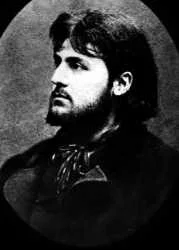
Germain Nouveau est l'aîné des 4 enfants de Félicien Nouveau (1826-1884) et de Marie Silvy (1832-1858). Germain Nouveau perd sa mère alors qu'il n'a que sept ans. Il est élevé par son grand-père. Après une enfance à Aix-en-Provence et des études qu'il effectue au petit séminaire, pensant même à embrasser la prêtrise, et après une année d’enseignement au lycée de Marseille en 1871-1872, Nouveau s'installe à Paris à l’automne 1872. Il publie son premier poème, "Sonnet d’été", dans La Renaissance artistique et littéraire, revue d’Émile Blémont et fait connaissance de Mallarmé, de Jean Richepin et les « Vivants » (Ponchon…) qui se réunissent au café Tabourey. Il fréquente aussi les zutistes, fait la connaissance de Charles Cros avec lequel il collabore à la rédaction des Dixains réalistes qui tournent en dérision les parnassiens. Il découvre dans l’Album zutique les poèmes laissés par Rimbaud et Verlaine, qui ont quitté la capitale depuis juillet 1872. Arthur Rimbaud, Paul Verlaine,...
7 poezii, 0 proze
 MS
MSMaurice Scève
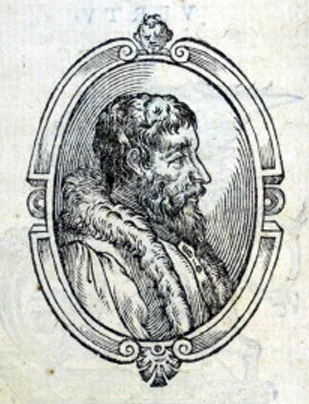
Maurice Scève (1501-1564?), représentant le plus illustre de l\'école lyonnaise, est né à Lyon, entre 1500 et 1505, dans une famille bourgeoise qui joue un rôle honorable dans la vie de la cité. Son existence reste mal connue. Il reçoit une solide formation intellectuelle. Peut-être devient-il docteur en droit. Vers 1530, il est en Avignon attaché au vicaire de l\'Archevêque. En 1533, il prend part aux recherches qui tentent de retrouver le tombeau de la mythique Laure, la dame que Pétrarque avait aimée et chantée dans son Canzoniere, morte en Avignon lors de la peste de 1348. Il y découvre un sonnet qu\'il attribue à Pétrarque. Cette trouvaille lui vaut la célébrité, et les félicitations du roi François Ier, lui même grand amateur de poésie pétrarquiste. De retour à Lyon, Scève fréquente les cercles cultivés et connaît les milieux néo-latins où s\'épanouisse le sodalitium lugdunense. En 1535, Scève fait la connaissance d\'Étienne Dolet et lui donne à imprimer son premier ouvrage, La...
6 poezii, 0 proze
 WW
WWWilliam Wordsworth
William Wordsworth was born on April 17, 1770 in Cockermouth, Cumberland, in the Lake District. His father was John Wordsworth, Sir James Lowther\'s attorney. The magnificent landscape deeply affected Wordsworth\'s imagination and gave him a love of nature. He lost his mother when he was eight and five years later his father. The domestic problems separated Wordsworth from his beloved and neurotic sister Dorothy, who was a very important person in his life. With the help of his two uncles, Wordsworth entered a local school and continued his studies at Cambridge University. Wordsworth made his debut as a writer in 1787, when he published a sonnet in The European Magazine . In that same year he entered St. John\'s College, Cambridge, from where he took his B.A. in 1791. During a summer vacation in 1790 Wordsworth went on a walking tour through revolutionary France and also traveled in Switzerland. On his second journey in France, Wordsworth had an affair with a French girl, Annette...
16 poezii, 0 proze
Thomas Gray
1716–71, English poet. He was educated at Eton and Peterhouse, Cambridge. In 1739 he began a grand tour of the Continent with Horace Walpole. They quarreled in Italy, and Gray returned to England in 1741. He continued his studies at Cambridge, and he remained there for most of his life, living in seclusion, studying Greek, and writing. In 1768 he was made professor of history and modern languages, but he did no real teaching. Although he was reconciled with Walpole, and formed other close relationships in his lifetime, his shy and sensitive disposition was ill adapted to the robust century in which he lived. He was offered the laureateship in 1757 but refused it. His first important poems, written in 1742, include “To Spring,” “On a Distant Prospect of Eton College,” and a sonnet on the death of his close friend Richard West. After years of revision he finished his great “Elegy Written in a Country Churchyard” (1751), a meditative poem presenting thoughts conjured up by the sight of a...
1 poezii, 0 proze
 JT
JTJacques Tahureau
Jacques Tahureau Écrivain français (Le Mans 1527 – v. 1555). Il prit part aux guerres d\'Italie ; de retour en France, il se lia d\'amitié avec J.-A. de Baïf et se familiarisa, grâce à ce dernier, avec la doctrine et la pratique de la jeune école de la Pléiade. Il mourut l\'année même de son mariage, en 1555. Il avait, en 1554, édité un recueil de poèmes pétrarquisants, les Sonnets, Odes et Mignardises amoureuses de l\'Admirée. Mais ce sont les Dialogues, publiés après sa mort en 1565, qui constituent la part de son œuvre la plus originale. S\'inspirant du philosophe grec Démocrite, il s\'y livre, au nom de la raison, à une critique systématique et impitoyable de toutes les « folies » humaines : après celle de l\'amour (à quoi est consacrée la plus grande partie du Premier Dialogue) vient celle des diverses impostures dont se sont rendus coupables au cours de l\'Histoire les nobles, les hommes de loi, les médecins, les astrologues, les alchimistes, et, pour finir, ceux qu\'il appelle...
1 poezii, 0 proze
 TB
TBTed Berrigan
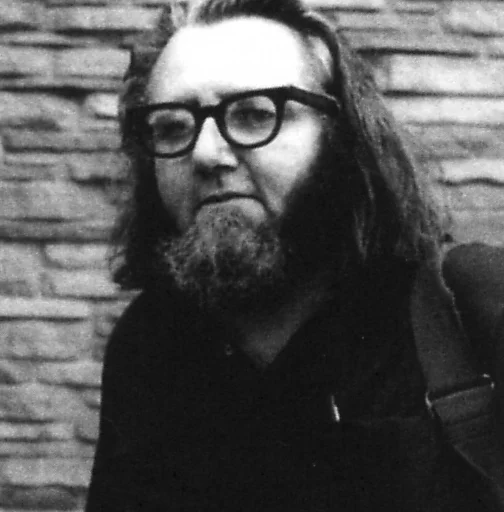
A fost unul dintre cei mai importanți poeți ai generației lui, faimos nu numai pentru scrisul său invocator din The Sonnets (1964) dar și pentru poeziile sale lirice ulterioare. A fost un profesor și un model pentru mulți poeți, în diferite universități, cât și în casa lui din Manhattan s Lower East Side. A murit la 4 iulie 1983. *** Ted Berrigan (15 November 1934 – 4 July 1983) was an American poet. Berrigan was born in Providence, Rhode Island, on November 15, 1934. After high school, he spent a year at Providence College before joining the U.S. Army in 1954 to serve in the Korean War. After three years in the Army, he finished his college studies at the University of Tulsa in Oklahoma, where he received a B.A. in English in 1959. He received his M.A. from Tulsa in 1962. Berrigan was married to Sandy Berrigan, also a poet, and they had two children, David Berrigan and Kate Berrigan. He and his second wife the poet Alice Notley were active in the poetry scene in Chicago for several...
3 poezii, 0 proze
 EB
EBElizabeth Barret Browning
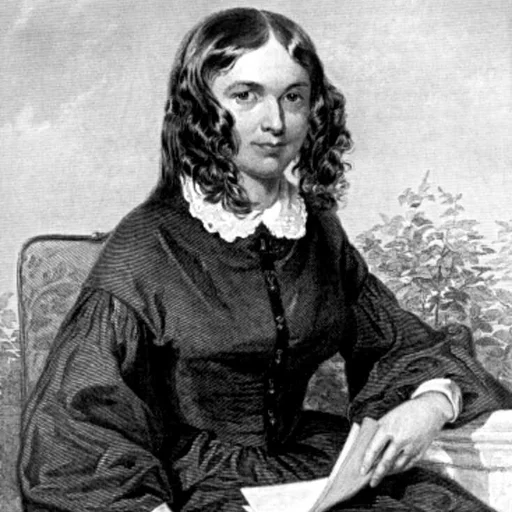
Naștere – 6 martie 1806 Kelloe, lângă Durham, Anglia Deces – 29 iunie 1861 (la 55 de ani) Florența, Italia Elizabeth Barrett Browning (n. 6 martie 1806 - d. 29 iunie 1861) a fost o poetă engleză. A scris versuri de o deosebită sensibilitate dedicate soțului ei, poetul Robert Browning. Opera 1847: Sonete din parte portughezei ("Sonnets from the Portuguese"); 1851: Ferestrele casei Guidi ("Casa Guidi Window"); 1860: Poeme înainte de Congres ("Poems Before Congress"); 1857: Aurora Leigh ("Aurora Leigh").
1 poezii, 0 proze
 DF
DFDesăvârșita Domniță Florentină
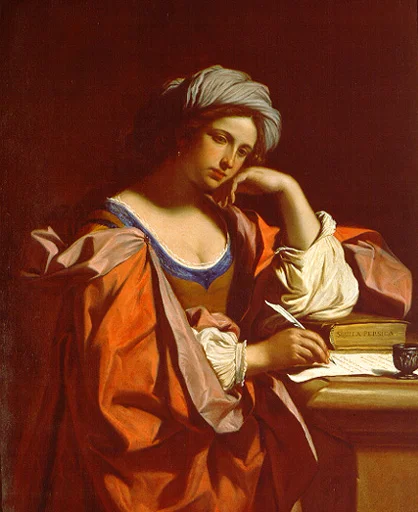
Compiuta Donzella Fiorentina este pseudonimul unei poete din secolul XIII. Existența ei, îndelung contestată, este astăzi în general acceptată de către critică. Contemporană cu Nina Siciliana, iubita lui Dante da Maiano *** La) Compiuta Donzella, called either di Firenze or Fiorentina, was the earliest poetess of the Italian language. Three of her sonnets survive in a single manuscript, and one is half of a tenzone. Compiuta may be her given name, but more probably a senhal (code name). Her full name translates "the accomplished young lady from Florence". Her existence was once in doubt and she was considered a construct of the poets, but this view has been discarded. In A la stagion che 'l mondo foglia e fiora ("In the season when the world sends forth leaves and flowers"), Compiuta complains of her father's choice of a husband for her. She is miserable at sprintime, when other lovers are rejoicing. In Lasciar voria lo mondo e Dio servire ("I would like to leave the world to serve...
1 poezii, 0 proze
Richard Von Schaukal
1892-1897 studiaza dreptul in Viena; in 1998 promoveaza examenul de licenta; face parte din categoria poetilor simbolisti din Viena; primul volum de poezii il scoate la varsta de 19 ani, sub influenta puternica a lui Hugo von Hofmannsthal. Opere: Poems (Dresden 1893); Verses 1892-96 (Bruenn 1896); My gardens. Lonely verses (Berlin 1897); Tristia. New poems from the years 1897-98 (Leipzig 1898); Days and dreams. New verses (Leipzig 1899; 2 1902 erw. Expenditure.); Longing. New verses (Munich 1900); Pierrot and Combine or the song of the marriage (Leipzig 1902); Previous evening. An act in verses (Leipzig 1902); Selected poems (Leipzig 1904); Book of the soul. New poems (Munich 1908); Child poems (Munich 1913); Autumn. Poems 1912-14 (Munich 1914); Eherne of sonnets 1914 (Munich 1915); Homeland of the soul. Poems 1914-16 (Munich 1916); War songs from Austria (Vienna 1917); Jahresringe. New poems 1918-21 (Braunschweig 1922); Autumn height. New poems 1921-33 (Paderborn 1933); Music of the...
2 poezii, 0 proze
Sonnet L
de William Shakespeare
How heavy do I journey on the way, When what I seek, my weary travel\'s end, Doth teach that ease and that repose to say \'Thus far the miles are measured from thy friend!\' The beast that bears me,...
Sonnet LI
de William Shakespeare
Thus can my love excuse the slow offence Of my dull bearer when from thee I speed: From where thou art why should I haste me thence? Till I return, of posting is no need. O, what excuse will my poor...
Sonnet LII
de William Shakespeare
So am I as the rich, whose blessed key Can bring him to his sweet up-locked treasure, The which he will not every hour survey, For blunting the fine point of seldom pleasure. Therefore are feasts so...
Sonnet LIII
de William Shakespeare
What is your substance, whereof are you made, That millions of strange shadows on you tend? Since every one hath, every one, one shade, And you, but one, can every shadow lend. Describe Adonis, and...
Sonnet LIV
de William Shakespeare
O, how much more doth beauty beauteous seem By that sweet ornament which truth doth give! The rose looks fair, but fairer we it deem For that sweet odour which doth in it live. The canker-blooms have...
Sonnet LV
de William Shakespeare
Not marble, nor the gilded monuments Of princes, shall outlive this powerful rhyme; But you shall shine more bright in these contents Than unswept stone besmear\'d with sluttish time. When wasteful...
Sonnet LVI
de William Shakespeare
Sweet love, renew thy force; be it not said Thy edge should blunter be than appetite, Which but to-day by feeding is allay\'d, To-morrow sharpen\'d in his former might: So, love, be thou; although...
Sonnet LVII
de William Shakespeare
Being your slave, what should I do but tend Upon the hours and times of your desire? I have no precious time at all to spend, Nor services to do, till you require. Nor dare I chide the...
Sonnet LVIII
de William Shakespeare
That god forbid that made me first your slave, I should in thought control your times of pleasure, Or at your hand the account of hours to crave ,Being your vassal, bound to stay your leisure! O, let...
Sonnet LIX
de William Shakespeare
If there be nothing new, but that which is Hath been before, how are our brains beguiled, Which, labouring for invention, bear amiss The second burden of a former child! O, that record could with a...