
"Revelion la Manastirea Putna" – 916 rezultate
0.03 secundeMeilisearch ML
MLManuel Lozano
Manuel Lozano nació en Córdoba, Rep. Argentina. Es escritor (poeta, narrador, crítico literario y ensayista). Ha cursado estudios de literatura y lingüística en Europa. Es "Master en Historia de la Cultura Argentina" (Escuela de Administración Cultural -E.D.A.C-, Bs. As.), habiendo recibido la máxima calificación (10) y la medalla "Victoria Ocampo", por su tesis "El enigma Silvina Ocampo. La Paradoja y lo Sublime". Concluyó, en 1998, el "Master en Comunicación", en la Fundación de Altos Estudios en Arte y Comunicación (F.A.C.U). Para ello elaboró una tesis sobre la resignificaciones de la agonía y la muerte en los mass-media. Lozano proclamado "Joven Sobresaliente de la Rep- Argentina 1992 de la Cámara Junior", por unanimidadA la edad de dieciocho años, presentó en la Universidad Nacional de Córdoba, sus ensayos: "Shopenhauer y la Revelación del Budismo en Occidente", y "Platón, Plotino y Neoplatónicos en el Renacimiento Italiano", como así también empezó a dictar conferencias y...
9 poezii, 0 proze
 JS
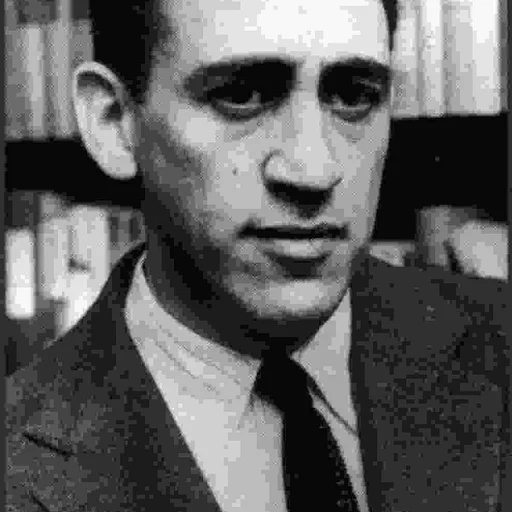
JSJerome David Salinger
Jerome David Salinger (n. 1 ianuarie 1919) este un scriitor american cunoscut cel mai bine pentru romanul De veghe în lanul de secară (în engleză The Catcher in the Rye), o poveste clasică a adolescenței, care a cunoscut o popularitate durabilă de la publicarea ei în 1951. O temă majoră în opera lui Salinger este mintea activă si puternică a tânărului neadaptat și efectul izbăvitor al copilului în viețile unor astfel de oameni. Născut în New York, ca fiu al unui tată evreu și a unei mame de origine irlandeză catolică, Salinger și-a început cariera scriind povestiri pentru reviste din New York. Din perioada de început, mai multe povestiri – cea mai notabilă fiind O zi perfectă pentru peștii banana – au fost remarcate. De asemenea, înainte de a părăsi America pentru a lua parte la război, a publicat două episoade din ceea ce avea să devină De veghe în lanul de secară: Sunt nebun și Ușoară rebeliune în afara Madison-ului (Slight Rebellion Off Madison). A urmat Academia Militară Valley...
2 poezii, 0 proze
 RT
RTRaúl González Tuñón
Raúl González Tuñón nació en Buenos Aires, el 29 de marzo de 1905, y falleció en la misma ciudad, en 1974. Poeta, periodista, viajero, militante comunista. A partir de 1922 comienza a publicar sus primeros versos en revistas de la época: "Inicial", "Proa", "Martín Fierro". Compartió con el grupo de Florida, los experimentos formales, y con el de Boedo, la preocupación social, que fue acentuándose con el tiempo. Entre sus libros se cuentan: El violín del diablo (1926), el inicial; Miércoles de ceniza (1928), en los que se animan tipos y parajes suburbanos; La calle del agujero en la media (1930), revelación poética de París; El otro lado de la Estrella; Todos bailan, poemas de Juancito Caminador (ambos en 1934); La rosa blindada (1936), poesía política, al que siguen otros del mismo carácter; Primer canto argentino (1945); Todos los hombres del mundo son hermanos (1954); A la sombra de los barrios amados (1957); Demanda contra el olvido (1963).
7 poezii, 0 proze
 RS
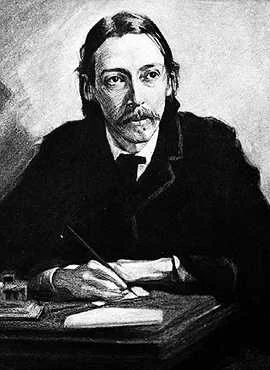
RSRobert Louis Stevenson
13 noiembrie 1850 - 3 decembrie 1894 Robert Louis Stevenson was born to Thomas and Margaret Isabella Balfour Stevenson in Edinburgh on 13 November 1850. From the beginning he was sickly. Through much of his childhood he was attended by his faithful nurse, Alison Cunningham, known as Cummy in the family circle. She told him morbid stories about the Covenanters (the Scots Presbyterian martyrs), read aloud to him Victorian penny-serial novels, Bible stories, and the Psalms, and drilled the catechism into him, all with his parents' approval. Thomas Stevenson was quite a storyteller himself, and his wife doted on their only child, sitting in admiration while her precocious son expounded on religious dogma. Stevenson inevitably reacted to the morbidity of his religious education and to the stiffness of his family's middle-class values, but that rebellion would come only after he entered Edinburgh University.
1 poezii, 0 proze
 EB
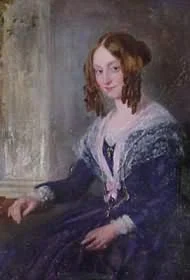
EBElizabeth Barrett Browning
Elizabeth Barrett Browning (6 March 1806 – 29 June 1861) was one of the most prominent poets of the Victorian era. Her poetry was widely popular in both England and the United States during her lifetime.[1] A collection of her last poems was published by her husband, Robert Browning, shortly after her death. Works/Collections 1820: The Battle of Marathon: A Poem. Privately printed 1826: A Essay On Mind, with Other Poems. London: James Duncan 1833: Prometheus Bound, Translated from the Greek of Aeschylus,and Miscellaneous Poems. London: A.J. Valpy 1838: The Seraphim, and Other Poems. London: Saunders and Otley 1844: Poems (UK) / A Drama of Exile, and other Poems (US). London: Edward Moxon. New York: Henry G. Langley 1850: Poems ("New Edition", 2 vols.) Revision of 1844 edition adding Sonnets from the Portuguese and others. London: Chapman & Hall 1851: Casa Guidi Windows. London: Chapman & Hall 1853: Poems (3d ed.). London: Chapman & Hall 1854: Two Poems: "A Plea for the Ragged Schools...
1 poezii, 0 proze
Thomas Gray
1716–71, English poet. He was educated at Eton and Peterhouse, Cambridge. In 1739 he began a grand tour of the Continent with Horace Walpole. They quarreled in Italy, and Gray returned to England in 1741. He continued his studies at Cambridge, and he remained there for most of his life, living in seclusion, studying Greek, and writing. In 1768 he was made professor of history and modern languages, but he did no real teaching. Although he was reconciled with Walpole, and formed other close relationships in his lifetime, his shy and sensitive disposition was ill adapted to the robust century in which he lived. He was offered the laureateship in 1757 but refused it. His first important poems, written in 1742, include “To Spring,” “On a Distant Prospect of Eton College,” and a sonnet on the death of his close friend Richard West. After years of revision he finished his great “Elegy Written in a Country Churchyard” (1751), a meditative poem presenting thoughts conjured up by the sight of a...
1 poezii, 0 proze
 WH
WHWilliam Ernest Henley
William Ernest Henley (23 August 1849 – 11 July 1903) was an English poet, critic and editor. Born 23 August 1849 Gloucester, England Died 11 July 1903 (aged 53) Occupation Poet, critic and editor Nationality English Education The Crypt School, Gloucester Writing period c. 1870–1903 Henley was born at Gloucester and was the eldest of a family of six, five sons and a daughter. His father, William, was a bookseller and stationer who died in 1868 leaving young children and creditors. His mother, Mary Morgan, was descended from the poet and critic, Joseph Warton. From 1861-67 Henley was a pupil at the Crypt Grammar School (founded 1539). A Commission had recently attempted to revive the school by securing the brilliant and academically distinguished T. E. Brown (1830-1897) as headmaster. Brown's appointment was short-lived (c.1857-63) but was a 'revelation' for Henley because it introduced him to a poet and 'man of genius - the first I'd ever seen'. This was the start of a lifelong...
1 poezii, 0 proze
Revelion la Manastirea Putna
de Laura Huiban
A doua editie a Festivalului de Poezie. ro, desfasurat la Putna in perioada 27 decembrie 2005 - 3 ianuarie 2006, ne-a oferit celor prezenti acolo sansa de a petrece pentru prima oara in viata un...
Festivalul de Poezie.ro - editie de Putna
de Laura Huiban
Nu se poate compara cu nimic. Si nici povesti. Trebuie sa fi fost acolo, la Arhondaricul Manastirii Putna, in locul acela inconjurat de brazi, de dealuri inalte acoperite cu zapada asternuta peste...
Festivalul poezie.ro, ediția a doua, Putna 2005-2006
de Radu Herinean
Îmi face o plăcere deosebită să vă anunț începerea înscrierilor pentru Festivalul poezie.ro, a doua ediție , pe care o organizăm la cumpăna dintre ani într-un loc încărcat de istorie: Mânăstirea...
Rusaliile - Făpturi fantastice și ritualuri de exorcizare la români
de Livia Rosca
La 50 de zile după Paști, poporul român serbeaza, timp de trei zile sau o saptamâna, Rusaliile. Cine sunt Rusalcele? Rusaliile sunt o straveche sărbătoare preluată de geto-daci din mitologia romană....
Revelion la capac
de diana weisz
Buda fără capăt de la fundul zilei Și metanul din respirația cerului Un lapsus de ciocolată pe fiecare față de staniol Lemnele s-au zbârcit în jurul bufnițelor lor Nu e nici o glumă Lumea se mișcă în...
Revelion la paralela... mi-i paralel
de Ion Diviza
Crăciun în gubernia Basarabia Vânturi reci ne dau fiori, Spulberă la geamuri neaua Și ne vin colindători Când cu ursul, când cu steaua. Colindător la Primărie La primar îmi dau concursul Și grozav ce...
Revelion la ambasada Rusiei
de Sorin Stoica
Au venit să mă ia de acasă doi domni cu căciuli de astrahan trase pe ochi. Se înnoptase de ore bune. Aveau accent rusesc și pistoale Makarov la brâu. Deci tovarăși, nu domni. Am vrut să le vorbesc de...
Vechea dimineata regasita
de Ovidiu Dragos
Vechea dimineață regăsită Chiar la marginea unui teren viran acoperit cu brichete, dar nu de cărbune, brichete din plastic rămase fără gaz. Fusese acolo un fel de …? Imobilul era destul de vechi iar...
Fara artificii
de Adria Martin
Am plecat din tara, Si surpiza cea mai mare a fost S-o gasesc aici. Si-am gasit-o, O port toata in mine! Nu, n-au fost petarde Si artificii de Revelion La Toronto. N-a aruncat nimeni cu sticle din...
Iti mai aduci aminte de…?
de Sandu Iaschevici
Iti mai aduci aminte de…? de Sandu Iaschevici, corneliu11@yahoo.com Parca toate s-au intamplat ieri! Cum e posibil sa fii trecut atatia ani intre ieri si azi? Terasele noastre de bere de la Astoria,...
Păzitoarea Vezuviului
de Paul Pietraru
VIII „După îmbrățișarea de bun găsit, întotdeauna când mă întâlneam prima oară cu o femeie o îmbrățișam, am pornit prin centrul vechi, era noapte deja, luminile orașului ne arătau dar ne și ascundeau...
Tăvălugul III
de Sofia Sinca
A doua lor întâlnire avusese loc în orașul T. unde studia fata. - Otilia sosesc vineri, iubita mea cu ochii de smarald. Abia aștept să te pot strânge în brațe, să-ți strivesc trupul de al meu, scria...
La revelion înainte!
de Elena Aprozeanu
Se aprind văpăi în burtă Fiindcă e revelion, Să mâncăm, viața e scurtă, Porci, viței - batalion! Ia și țuică, vin, daiquiri Ca să intri-n forme noi Și să dai dezamăgirii Starea de a fi vioi. Pune...