
"Once There Was..." – 2041 rezultate
0.02 secundeMeilisearch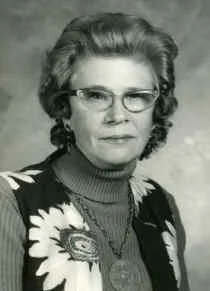 LH
LHLorraine Ellis Harr
Lorraine Ellis Harr was one of the important figures in the history of American haiku. She lived in Portland, Oregon, where for almost four decades she worked tirelessly to promote the understanding of the haiku form and to encourage the reading and writing of haiku in English through the publication of a quarterly journal, Dragonfly, the organization, Western World Haiku Society and the fifteen books of her own poems in all the Japanese genres . Internationally known poet and editor, Kazuo Sato once commented that if Lorraine Ellis Harr lived in Japan, she would be a national treasure. Opal Lorraine Ellis Harr was born on Halloween, October 31, 1912, in Sullivan, Illinois. Her father left the family when she was three years old. The mother and three girls (Lorraine is the youngest) moved to Cooperstown, North Dakota to live for several years before moving to Portland. Her mother had a sister who lived there. The sister's husband promised Lorraine's mother a job if they moved to...
4 poezii, 0 proze
 MR
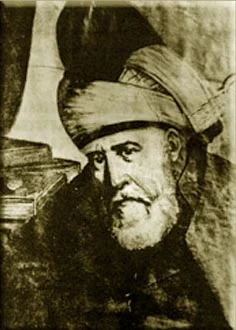
MRMevlana Jalaluddin Rumi
Mawlānā Jalāl ad-Dīn Muḥammad Balkhī, also known as Jalāl ad-Dīn Muḥammad Rūmī, but known to the English-speaking world simply as Rumi, (30 September 1207 – 17 December 1273), was a 13th-century Persian poet, Islamic jurist, theologian, and mystic. Rūmī is a descriptive name meaning "the Roman" since he lived most of his life in an area called Rūm because it was once ruled by the Byzantine Empire. According to tradition, Rumi was born in Balkh, Khorasan (now in Afghanistan), the hometown of his father's family. Scholars, however, argue that he was most likely born in Wakhsh, a small town located at the river Wakhsh in what is now Tajikistan. Wakhsh belonged to the larger province of Balkh, and in the year Rumi was born, his father was an appointed scholar there. Both these cities were at the time included in the Greater Persian cultural sphere of Khorasan, the easternmost province of historical Persia, and were...
162 poezii, 0 proze
 JR
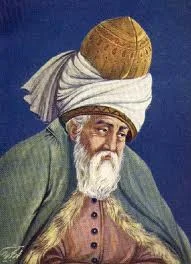
JRJalal ad-Dīn Muhammad Rumi
Jalāl ad-Dīn Muḥammad Balkhī, also known as Jalāl ad-Dīn Muḥammad Rūmī, and popularly known as Mowlānā but known to the English-speaking world simply as Rumi (30 September 1207 – 17 December 1273), was a 13th-century Persian (Tajik) Muslim poet, jurist, theologian, and Sufi mystic. Rūmī is a descriptive name meaning "the Roman" since he lived most of his life in an area called Rūm because it was once ruled by the Eastern Roman Empire. It is likely that he was born in the village of Wakhsh, a small town located at the river Wakhsh in what is now Tajikistan. Wakhsh belonged to the larger province of Balkh, and in the year Rumi was born, his father was an appointed scholar there. Both these cities were at the time included in the greater Persian cultural sphere of Khorasan, the easternmost province of Persia, and were part of the Khwarezmian Empire. Image of the Rumi on an old book in the Mevlâna museum; Konya,...
0 poezii, 0 proze
 FB
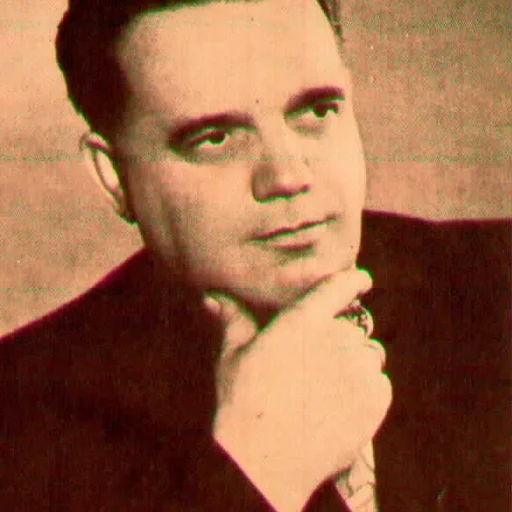
FBFranz Bardon
Franz Bardon (December 1, 1909 – July 10, 1958), born in Opava, Austrian Silesia, was both a stage magician and student and teacher of Hermetics. He was member of Czech hermetic society Universalia. During World War II Bardon was at one point held in a concentration camp for refusing to participate in Nazi Mysticism. Bardon was rescued by Russian soldiers who raided the camp. Bardon continued his work in the fields of Hermetics until 1958 when he was arrested and imprisoned in Brno Czechoslovakia. Bardon died on July 10, 1958 while in the custody of police. He is best known for his three volumes on Hermetic magic. These volumes are Initiation Into Hermetics, The Practice of Magical Evocation and The Key to the True Quabbalah. Additionally there was a fourth work attributed to him by the title of Frabato the Magician, supposed to be a disguised autobiography. Though the book lists its author as Bardon, it was actually written by his secretary, Otti Votavova. While some elements of the...
1 poezii, 0 proze
 SL
SLStanis³aw Jerzy Lec
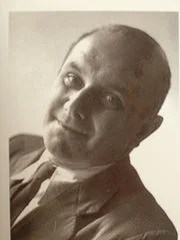
Stanis³aw Jerzy Lec (6 March 1909 – 7 May 1966) (born Baron Stanis³aw Jerzy de Tusch-Letz) was a Polish poet and aphorist of Polish and Jewish noble origin. Often mentioned among the greatest writers of post-WW2 Poland, he was one of the most influential aphorists on the 20th century. Lyrical poetry, sceptical philosophical-moral aphorisms, often with a political subtext. He was born on March 6, 1909 in Lviv (then Lemberg, Austro-Hungarian Empire), the son of the Baron Benon de Tusch-Letz and Adela Safrin. The family moved to Vienna at the onset of First World War, and Lec' early education was received there. After the war the family returned to Lviv-Lemberg to continue his schooling at the Lemberg Evangelical School. In 1927 he matriculated at the Lviv's Jan Kazimir University in jurisprudence and Polish. As a result of his political activities — writing articles for socialist revolutionary periodicals, making speeches in the Technological Institute’s Yellow Hall — Lec had to leave...
1 poezii, 0 proze
 AS
ASAlan Seeger
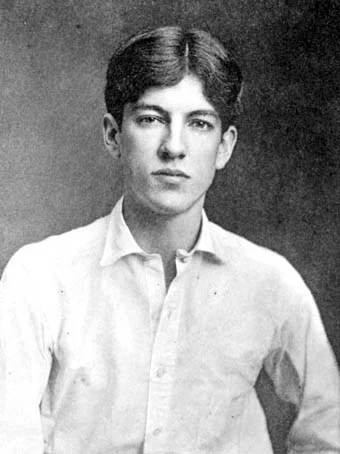
Alan Seeger, born on June 22, 1888 and died July 4, 1916, was an American poet who also fought in World War I. Born in New York, Seeger moved with his family to Staten Island at the age of one and remained there until the age of ten. In 1900, his family moved to Mexico for two years, which influenced the imagery of some of his poetry. His brother Charles Seeger, a noted musicologist, was the father of the American folk singer, Pete Seeger. Seeger entered Harvard in 1906 after attending several elite preparatory schools, including Hackley School. At Harvard, he edited and wrote for the Harvard Monthly. After graduating in 1910, he moved to Greenwich Village for two years, where he wrote poetry and enjoyed the life of a young bohemian. During that time, he attended soirées at the Mlles. Petitpas\' boardinghouse (319 West 29th Street), where the presiding genius was the artist and sage John Butler Yeats, father of the poet.[1] Having moved to the Latin Quarter of Paris to continue his...
20 poezii, 0 proze
paulo coelho
Paulo Coelho was born in 1947 into a middle-class family, the son of Pedro, an engineer, and Lygia, a housewife. At seven, he entered the Jesuit school of San Ignacio in Rio de Janeiro. Paulo came to detest the obligatory nature of religious practice. However, although he hated praying and going to mass, there were compensations. In the school\'s austere corridors, Paulo discovered his true vocation: to be a writer. He won his first literary prize in a school poetry competition, and his sister, Sonia, recounts how she won an essay prize by entering something that Paulo had discarded in the wastepaper bin. \"Paulo Coelho is not only one of the most widely read, but also one the most influential authors writing today,\" wrote the Bambi awards in Germany. \"His books have had a life-enhancing impact on millions of people\" wrote The Times in UK. To date a sum of 280 translations in 59 languages have been published with sales totalling almost 56 million copies in 150 countries. For 15...
0 poezii, 0 proze
 KV
KVKatri Vala
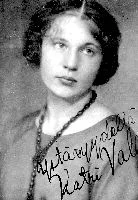
( 1901 – 1944 ) One of the Finnish poets who brought a free verse style of writing poetry into the mainstream of Finnish literature. Her work is full of the ecstasy of life, longing for distant places, and a use of vocabulary glutted in color, into which are woven a general radical quality, which affects her late works especially. She is considered a late proponent of the ideals of the Carriers of the Flame. Her earlier works show her dedicated to light and its power. Her output is not extensive. Mention should be made of: Kaukainen puutarha (The Distant Garden) (1924) Sininen ovi (The Blue Door) (1926) Maan laiturilla (On the Land Wharf) (1930) In some later works, there is a more serious, darker tone, represented by: Paluu (The Return) (1934) Pesäpuu palaa (The Nest Tree Burns) (1942) Her life’s program was: Oh! If life could be better than death! Katri Vala died of tuberculosis at the end of WW II, while under treatment in Sweden. Even so, her poetry remained more life-positive...
1 poezii, 0 proze
 WS
WSWallace Stevens
Stevens was born in Reading, Pennsylvania on October 2, 1879, and died at the age of seventy-six in Hartford, Connecticut on August 2, 1955. He attended Harvard as a special student from 1897 to 1900 but did not graduate; he graduated from New York law school in 1903 and was admitted to the New York bar in 1904, the year he met Elsie Kachel, a young woman from Reading, whom he married in 1909. They had one daughter, Holly Bight, born in 1924, conceived on a leisurely ocean voyage California via the Panama Canal that they took to celebrate the publication of his first book. Stevens became interested in verse-writing at Harvard, submitting material to the Harvard Advocate, but he would be 36 before his first work was published in 1915. He soon was contributing to Poetry (Chicago), and his first book Harmonium was published in 1923 by the distinguished firm of Alfred A. Knopf. Though he was always much admired by his contemporaries ("There is a man whose work," Hart Crane wrote of him in...
19 poezii, 0 proze
Wallace Stevens
Stevens was born in Reading, Pennsylvania on October 2, 1879, and died at the age of seventy-six in Hartford, Connecticut on August 2, 1955. He attended Harvard as a special student from 1897 to 1900 but did not graduate; he graduated from New York law school in 1903 and was admitted to the New York bar in 1904, the year he met Elsie Kachel, a young woman from Reading, whom he married in 1909. They had one daughter, Holly Bight, born in 1924, conceived on a leisurely ocean voyage California via the Panama Canal that they took to celebrate the publication of his first book. Stevens became interested in verse-writing at Harvard, submitting material to the Harvard Advocate, but he would be 36 before his first work was published in 1915. He soon was contributing to Poetry (Chicago), and his first book Harmonium was published in 1923 by the distinguished firm of Alfred A. Knopf. Though he was always much admired by his contemporaries (\"There is a man whose work,\" Hart Crane wrote of him...
0 poezii, 0 proze
The Mountain
de Robert Frost
The mountain held the town as in a shadow. I saw so much before I slept there once: I noticed that I missed stars in the west, Where its black body cut into the sky. Near me it seemed: I felt it like...
little story
de .
There was once a little boy lonely, grump, depressed and coy. so the days come one by one poor boy, spitting on fun. long time passed and near him came a red blue submarine. some jump out of this old...
Dope Demand (ilustrată)
de Adela Setti
there was a bartender in the middle of darkness mixing sound to coffee would you like some cocktail, he asked, or maybe just a bit of angel dust I tasted once I said, I\'m thinking I\'m there right...
I always say
de Lia Miruna Dumitrache
So there we were, in hell. Burning programme’s nine to four – the perpetual thing is bogus cause there’s too many of us and they have to have shifts and besides they gotta cool the place down at...
On Truth and Lies in a Nonmoral Sense
de Friedrich Nietzsche
On Truth and Lies in a Nonmoral Sense (1873) By Friedrich Nietzsche Once upon a time, in some out of the way corner of that universe which is dispersed into numberless twinkling solar systems, there...
The Code
de Robert Frost
There were three in the meadow by the brook Gathering up windrows, piling cocks of hay, With an eye always lifted toward the west Where an irregular sun-bordered cloud Darkly advanced with a...
Dracula
de Bram Stoker
Chapter 13 - Dr. Seward\'s Diary The funeral was arranged for the next succeeding day, so that Lucy and her mother might be buried together. I attended to all the ghastly formalities, and the urbane...
Dracula
de Bram Stoker
Chapter 21 - Dr. Seward\'s Diary 3 October. Let me put down with exactness all that happened, as well as I can remember it, since last I made an entry. Not a detail that I can recall must be...
Ceai de ierburi acrișoare
de Lavinia Micula
te voi întreba dacă ai băut lemongrass, fulgi de cocos, soc, mere, hibiscus în ultimii x ani dacă ai auzit vreo femeie să-ți spună că punctul g se află direct în inima ta dacă ți-a legat liniile din...
Prin București
de Carmen Sorescu
Mi-am pus sandalele roșii și am ieșit prin București Mărginită de marea de oameni din Piața Romană Trecătorii se loveau de mine ca de un țărm plin de sevă Am mers agale pe lângă boutiquri, vitrine...