
"Man at work" – 3547 rezultate
0.03 secundeMeilisearchDavid Bowie
A consummate musical chameleon, David Bowie created a career in the Sixties and Seventies that featured his many guises: folksinger, androgyne, alien, decadent, blue-eyed soul man, modern rock star-each one spawning a league of imitators. His late-Seventies collaborations with Brian Eno made Bowie one of the few older stars to be taken seriously by the new wave. In the Eighties, Let\'s Dance (#1, 1983), his entree into the mainstream, was followed by attempts to keep up with current trends. David Jones took up the saxophone at age 13, and when he left Bromley Technical High School (where a friend permanently paralyzed Jones\' left pupil in a fight) to work as a commercial artist three years later, he had started playing in bands (the Konrads, the King Bees, David Jones and the Buzz). Three of Jones\' early bands -- the King Bees, the Manish Boys (featuring session guitarist Jimmy Page), and Davey Jones and the Lower Third -- each recorded a single. In 1966, after changing his name to...
2 poezii, 0 proze
 WS
WSWallace Stevens
Stevens was born in Reading, Pennsylvania on October 2, 1879, and died at the age of seventy-six in Hartford, Connecticut on August 2, 1955. He attended Harvard as a special student from 1897 to 1900 but did not graduate; he graduated from New York law school in 1903 and was admitted to the New York bar in 1904, the year he met Elsie Kachel, a young woman from Reading, whom he married in 1909. They had one daughter, Holly Bight, born in 1924, conceived on a leisurely ocean voyage California via the Panama Canal that they took to celebrate the publication of his first book. Stevens became interested in verse-writing at Harvard, submitting material to the Harvard Advocate, but he would be 36 before his first work was published in 1915. He soon was contributing to Poetry (Chicago), and his first book Harmonium was published in 1923 by the distinguished firm of Alfred A. Knopf. Though he was always much admired by his contemporaries ("There is a man whose work," Hart Crane wrote of him in...
19 poezii, 0 proze
Wallace Stevens
Stevens was born in Reading, Pennsylvania on October 2, 1879, and died at the age of seventy-six in Hartford, Connecticut on August 2, 1955. He attended Harvard as a special student from 1897 to 1900 but did not graduate; he graduated from New York law school in 1903 and was admitted to the New York bar in 1904, the year he met Elsie Kachel, a young woman from Reading, whom he married in 1909. They had one daughter, Holly Bight, born in 1924, conceived on a leisurely ocean voyage California via the Panama Canal that they took to celebrate the publication of his first book. Stevens became interested in verse-writing at Harvard, submitting material to the Harvard Advocate, but he would be 36 before his first work was published in 1915. He soon was contributing to Poetry (Chicago), and his first book Harmonium was published in 1923 by the distinguished firm of Alfred A. Knopf. Though he was always much admired by his contemporaries (\"There is a man whose work,\" Hart Crane wrote of him...
0 poezii, 0 proze
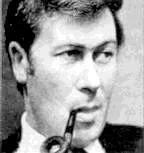 JO
JOJohn James Osborne
English dramatist. He began his theatrical career as an actor and playwright in provincial English repertory theaters. Osborne\'s plays usually focus on an individual character and the sheer force of his language rather than on action. His first commercial success was Look Back in Anger (1956), concerning a restless and vociferous young man of the working class who is at war with himself and society; it became the seminal work for the so-called angry young men. His other plays depict the frustration of living without hope in a world filled with false values. Among Osborne\'s other plays are The Entertainer (1957), Luther (1961), Inadmissible Evidence (1964), A Patriot for Me (1965), The End of Me Old Cigar (1974), Watch It Come Down (1976), and Déjà vu (1991). He also wrote the screenplay for Tom Jones (1963).
1 poezii, 0 proze
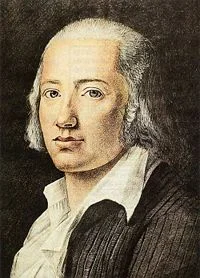 HF
HFHÖLDERLIN, Friedrich
Johann Christian Friedrich Hölderlin (20 March 1770 – 6 June 1843) was a major German lyric poet. His work bridges the Classical and Romantic schools. Having spent most of his life tormented by mental illness, he suffered great loneliness, and often spent his time playing the piano, drawing, reading, writing, and enjoyed travelling when he had the chance. The poetry of Hölderlin, widely recognized today as one of the highest points of German literature, was little known or understood during his lifetime and slipped into obscurity shortly after his death; his illness and reclusion made him fade from his contemporaries' consciousness – and, even though selections of his work were being published by his friends already during his lifetime, it was largely ignored for the rest of the 19th century. In fact, Hölderlin was a man of his time, an early supporter of the French Revolution – in his youth at the Seminary of Tübingen, he and some colleagues from a "republican club" planted a "Tree...
22 poezii, 0 proze
 DG
DGDavid Gascoyne
David Gascoyne (October 10, 1916 - November 25, 2001) was an English poet associated with the Surrealist movement. Gascoyne was born in Harrow and grew up in England and Scotland and attended Salisbury Cathedral School and Regent Street Polytechnic in London. He spent part of the early 1930s in Paris. His first book, Roman Balcony and Other Poems, was published in 1932, when he was sixteen. A novel, Opening Day, was published the following year. However, it was Man's Life is This Meat (1936), which collected his early surrealist work and translations of French surrealists, and Hölderlin's Madness (1938) that established his reputation. These publications, together with his 1935 A Short Survey of Surrealism and his work on the 1936 London International Surrealist Exhibition, which he helped to organise, made him one of a small group of English surrealists that included Hugh Sykes Davies and Roger Roughton. Ironically, at this exhibition, Gascoyne had to rescue Salvador Dalí from the...
5 poezii, 0 proze
 AA
AAAlphonse Allais
Alphonse Allais (October 20, 1854 - October 28, 1905) was a French writer and humorist born in Honfleur, Calvados. He is the author of many collections of whimsical writings. A poet as much as a humorist, he in particular cultivated the verse form known as holorhyme, i.e. made up entirely of homophonous verses, where entire lines rhyme. For example: par les bois du djinn où s'entasse de l'effroi, parle et bois du gin ou cent tasses de lait froid. Allais is also credited with the earliest known example of a completely silent musical composition. Composed in 1897, his Funeral March for the Obsequies of a Deaf Man -- consisting of nine blank measures -- predates comparable works by John Cage and Erwin Schulhoff by a considerable margin. His piece "Story for Sara" was translated and illustrated by Edward Gorey. Allais participated in humorous exhibitions, particularly in those of the Salon des Arts Incohérents of 1883 and 1884, held at the Galerie Vivienne. At these Allais exhibited...
1 poezii, 0 proze
 LC
LCLuis Cernuda
Luis Cernuda (born Luis Cernuda Bidón September 21, 1902, Seville – November 5, 1963, Mexico City), was a Spanish poet and literary critic. The son of a military man, Cernuda received a strict education as a child, and then studied law at the University of Seville, where he met the poet and literature professor Pedro Salinas. In 1928, after his mother died, Cernuda left his hometown, with which he had all his life an intense love-hate relationship. He briefly moved to Madrid, where he quickly became part of the literary scene. However, his detached, timid and morose character, his search of perfection frequently made him lose friendships and popularity. His mentor and former professor Salinas arranged for him to take a lectureship for a year at the University of Toulouse. From June 1929 until 1937 Cernuda lived in Madrid and participated actively in the literary and cultural scene of the Spanish capital. Cernuda collaborated with many organisations working to support a more liberal...
22 poezii, 0 proze
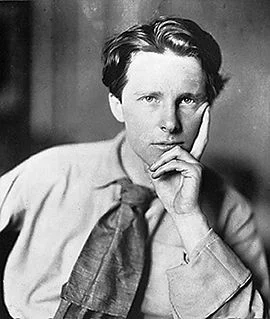 RB
RBRupert Chawner Brooke
Rupert Chawner Brooke (middle name sometimes given as Chaucer)(3 August 1887–23 April 1915) was an English poet known for his idealistic war sonnets written during the First World War (especially The Soldier); however, he never experienced combat at first hand. He was also known for his boyish good looks, which prompted the Irish poet William Butler Yeats to describe him as \"the handsomest young man in England\". English poet Brooke was born at 5 Hillmorton Road in Rugby, Warwickshire, the second of the three sons of William Parker Brooke, a Rugby schoolmaster, and Ruth Mary Brooke, née Cotterill. He attended Hillbrow Prep School before being educated at Rugby School. While travelling in Europe, he prepared a thesis entitled \"John Webster and the Elizabethan Drama\", which won him a scholarship to King\'s College, Cambridge, where he became a member of the Cambridge Apostles, helped found the Marlowe Society drama club and acted in plays including the Cambridge Greek Play. Brooke...
7 poezii, 0 proze
Jim Morrison
The facts are very simple. So simple that they might mislead you into thinking that the young man whose picture you see on this page is- well, a lot like a lot of other young men. But he isn`t. His full real name is James Douglas Morrison. He was born on December 8, 1943, in Melbourne, Fla.- which is near Cape Kennedy. Jim is six feet tall and has brown hair and haunting blue-grey eyes. After attending Florida State University, he moved to California, where he studied film-making at UCLA. Fortunately, he was side-tracked into the world of music (which had always held great interest for him) and he soon found himself the lead singer of a group called the Doors.
44 poezii, 0 proze
Man at work
de Robert Nutu
(...)Barul gării, înghesuit între două clădiri neterminate cu mai multe etaje, își exhiba firma înclinată câțiva metri mai încolo, cu ușa deschisă-n lături proptită cu un scaun; era o construcție...
The Seafarer
de Ezra Pound
May I for my own self song\'s truth reckon, Journey\'s jargon, how I in harsh days Hardship endured oft. Bitter breast-cares have I abided, Known on my keel many a care\'s hold, And dire sea-surge,...
The Axe Helve
de Robert Frost
I\'ve known ere now an interfering branch Of alder catch my lifted axe behind me. But that was in the woods, to hold my hand From striking at another alder\'s roots, And that was, as I say, an alder...
PARADISE LOST -- Book III
de John Milton
Book III Hail, holy Light, offspring of Heaven firstborn, Or of the Eternal coeternal beam May I express thee unblam\'d? since God is light, And never but in unapproached light Dwelt from eternity,...
The Code
de Robert Frost
There were three in the meadow by the brook Gathering up windrows, piling cocks of hay, With an eye always lifted toward the west Where an irregular sun-bordered cloud Darkly advanced with a...
The Death of the Hired Man
de Robert Frost
Mary sat musing on the lamp-flame at the table Waiting for Warren. When she heard his step, She ran on tip-toe down the darkened passage To meet him in the doorway with the news And put him on his...
Dialogue Between a Priest and a Dying Man (1782)
de Donatien Alphonse François, marquis de Sade
PRIEST - Come to this the fatal hour when at last from the eyes of deluded man the scales must fall away, and be shown the cruel picture of his errors and his vices - say, my son, do you not repent...
I\'M YOUR MAN
de Leonard Cohen
if you want a lover I\'ll do anything you ask me to If you want another kind of love I\'ll wear a mask for you If you want a partner take my hand or if you want to strike me down in anger here I...
Death of a ladies man
de Leonard Cohen
Ah the man she wanted all her life was hanging by a thread \"I never even knew how much I wanted you,\" she said. His muscles they were numbered and his style was obsolete. \"O baby, I have come too...
Epilogue
de Robert Browning
At the midnight in the silence of the sleep-time, When you set your fancies free, Will they pass to where--by death, fools think, imprisoned-- Low he lies who once so loved you, whom you loved so,...