
"Lied for the Moon and the Evening Star" – 1346 rezultate
0.03 secundeMeilisearch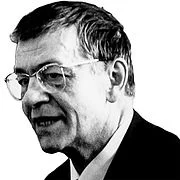 PW
PWPeter Weiss
Peter Ulrich Weiss (November 8, 1916 – May 10, 1982) was a German writer, painter, and artist of adopted Swedish nationality. He is particularly known for his play Marat/Sade and his novel The Aesthetics of Resistance. Weiss was born in Nowawes (now part of Potsdam-Babelsberg), Brandenburg, to a Hungarian Jewish father and Christian mother. At age three he moved with his family to Bremen, and then during his adolescence to Berlin where Weiss began training for a career as a visual artist. In 1934 he emigrated with his family to Chislehurst, near London, England, where he studied photography at the Polytechnic School of Photography, and then in 1937-1938 attended the Prague Art Academy. After the German occupation of the Sudetenland in 1938, his family moved to Sweden, and Weiss himself removed to Switzerland. In 1939 he again emigrated to Stockholm, Sweden, where he lived for the rest of his life. He became a Swedish citizen in 1946. Weiss was married three times: to the painter Helga...
0 poezii, 0 proze
Don Miguel de Cervantes y Saavedra
It is not known for certain the exact date of his birth, but since according to Spanish tradition the Christening was carried through very closely after the birth, there is no doubt that his birthday was in 1547. The actual date of the Christening was October 9th, 1547 at the city of Alcala de Henares. Since then, little is known of his childhood, other than he lived with his family in Valladolid, Madrid, and other Andalusian cities. Finally, they settled in Madrid, and afterwards, he became the attendant to the Cardinal Acquaviva in Italy in 1569 . Later on, Cervantes enlisted in to armed forces for the naval Battle of Lepanto (it took place on the 7th of December of 1571) where he was injured. This meant the handicap of his left hand, but he still continued as a soldier, on his voyage returning to Spain 1575 in the galley Sun, he fell prisoner of the Turks when it was over powered. The next five years, Cervantes is a prisoner of war in Algiers, from where he tried to escape four...
1 poezii, 0 proze
Raymond Carver
The American short story writer and poet Raymond Carver was born in Clatskanie, Oregon, on May 25, 1938, and lived in Port Angeles, Washington during his last ten, sober years until his death from cancer on August 2, 1988. He was a Guggenheim Fellow in 1979 and was twice awarded grants from the National Endowment for the Arts. In 1983 Carver received the prestigious Mildred and Harold Strauss Living Award which gave him $35,000 per year tax free and required that he give up any employment other than writing, and in 1985 Poetry magazine\'s Levinson Prize. In 1988 he was elected to the American Academy and Institute of Arts and Letters and was awarded an honorary Doctorate of Letters from the University of Hartford. He received a Brandeis Citation for fiction in 1988. His work has been translated into more than twenty languages. At least that\'s the basic biography. Of course there\'s no room in it for the nature of the hardship he and his family went through during most of those fifty...
3 poezii, 0 proze
 MG
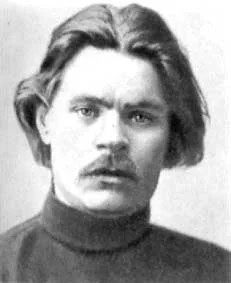
MGMaxim Gorki
[[en]] * Born: 16 March 1868 * Birthplace: Nizhny Novgorod (now Gorky), Russia * Death: June 1936 * Best Known As: Russian writer known for his socialist realism Name at birth: Aleksey Maksimovich Peshkov Maxim Gorky (also spelled Maksim Gorki) is one of the giants of 20th century Russian literature and theater, known for his realistic depictions of how terrible it is to be poor and oppressed. Gorky himself grew up in rough times and was a lifelong spokesperson for the underclass. His political activism led to several years of exile, in spite of his popularity with Russian readers. By 1900 Gorky was a famous literary figure, thanks in part to help from Anton Chekhov. His short stories and his first novel, Foma Gordeyev (1902) gave him notoriety as well as critical success, but his outspoken opposition to the rule of Nicholas II led to his exile to the island of Capri (1907-13). After the 1917 revolution Gorky's criticism of his friend V. I. Lenin and the Bolsheviks led to another...
2 poezii, 0 proze
 JJ
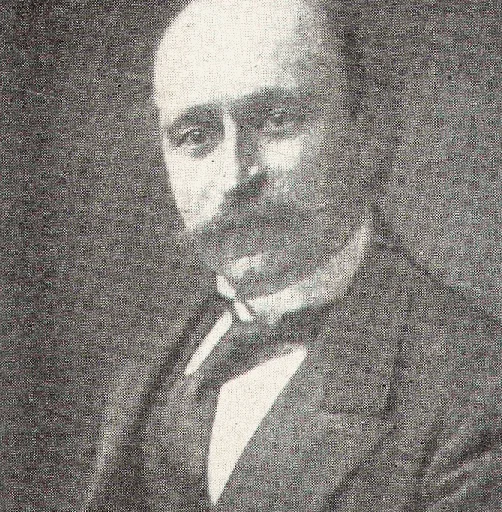
JJJoseph Jacobs
Joseph Jacobs (29 August 1854 - 30 January 1916) was a literary and Jewish historian. He was a writer for the Jewish Encyclopaedia and a notable folklorist, creating several noteworthy collections of fairy tales. Jacobs was born in Sydney,Australia, the son of John and Sarah Jacobs. He was educated at Sydney Grammar School and at the University of Sydney, where he won a scholarship for classics, mathematics and chemistry. He did not complete his studies in Sydney, but left for England at the age of 18 and entered St John's College, Cambridge. He graduated B.A. in 1876, and in 1877 studied at the University of Berlin. He was secretary of the Society of Hebrew Literature from 1878 to 1884, and in 1882 came into prominence as the writer of a series of articles in The Times on the persecution of Jews in Russia. This led to the formation of the mansion house fund and committee, of which Jacobs was secretary from 1882 to 1900. During these years he gave much time to anthropological studies...
1 poezii, 0 proze
 SC
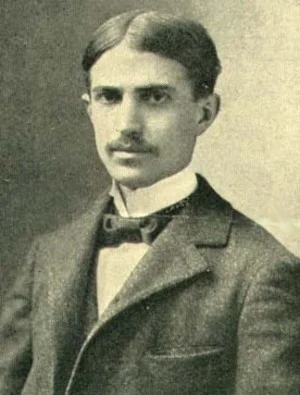
SCStephen Crane
Stephen Crane (1871-1900), American author, whose second novel, The Red Badge Of Courage (1895), brought him international fame. The Red Badge of Courage depicted the American Civil War from the point of view of an ordinary soldier. It has been called the first modern war novel. Crane was born in Newark, New Jersey, on November1, 1871, as the 14th child of a Methodist minister. He started to write stories at the age of eight and at 16 he was writing articles for the New York Tribune. Crane studied at Lafayette College and Syracuse University. After his mother's death in 1890 - his father had died earlier - Crane moved to New York, where he lived a bohemian life, and worked as a free-lance writer and journalist. While supporting himself by his writings, he lived among the poor in the Bowery slums to research his first novel. Crane's first novel, Maggie: A Girl Of The Streets(1893) was a milestone in the development of literary naturalism. Crane had to print the book at his own expense,...
11 poezii, 0 proze
 AP
APAlejandra Pizarnik
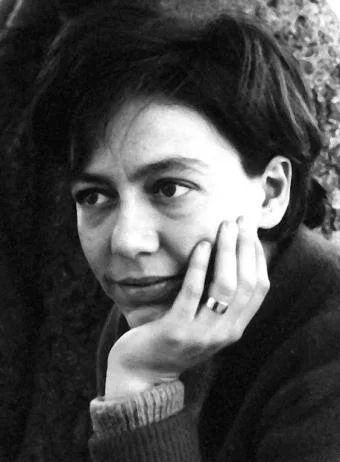
Life and Work She was born on April 29, 1936 to Russian Jewish immigrant parents in Avellaneda, a suburb of Buenos Aires, Argentina. A year after entering the department of Philosophy and Letters at the Universidad de Buenos Aires, Pizarnik published her first book of poetry, La tierra más ajena (1955). Soon after, she studied painting with Juan Batlle Planas. Pizarnik followed her debut work with two more volumes of poems, La última inocencia (1956) and Las aventuras perdidas (1958). From 1960 to 1964 Pizarnik lived in Paris. There she worked for the journal Cuadernos, sat on the editorial board of the magazine Les Lettres Nouvelles, and participated in the Parisian literary world. Pizarnik also attended a variety of courses at the Sorbonne, including contemporary French Literature. She died in Buenos Aires of a self-induced overdose of seconal. [edit] Words in life * The Land Far Beyond(La tierra más ajena) (1955) * The Last Innoncence (La última inocencia, 1956) * The Lost...
8 poezii, 0 proze
 CS
CSCharles Louis de Secondad
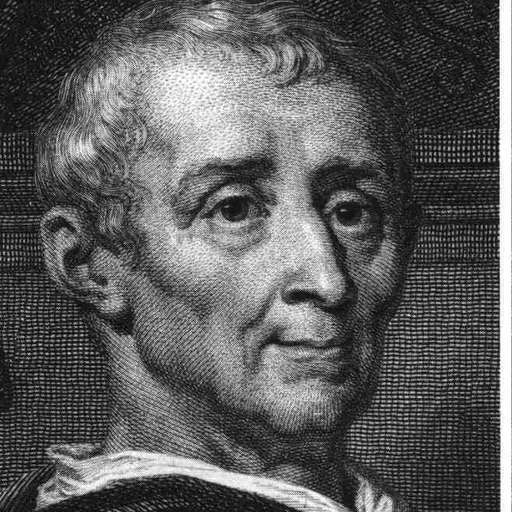
Charles-Louis de Secondat, baron de La Brède et de Montesquieu (English pronunciation: /ˈmɒntɨskjuː/; 18 January 1689, La Brède, Gironde – 10 February 1755), was a French social commentator and political thinker who lived during the Era of the Enlightenment. He is famous for his articulation of the theory of separation of powers, taken for granted in modern discussions of government and implemented in many constitutions throughout the world. He was largely responsible for the popularization of the terms feudalism and Byzantine Empire. After having studied at the Catholic College of Juilly, Charles-Louis de Secondat married. His wife, Jeanne de Lartigue, a Protestant, brought him a substantial dowry when he was 26. The next year, he inherited a fortune upon the death of his uncle, as well as the title Baron de Montesquieu and Président à Mortier in the Parliament of Bordeaux. By that time, England had declared itself a constitutional monarchy in the...
2 poezii, 0 proze
 S
SSaadi
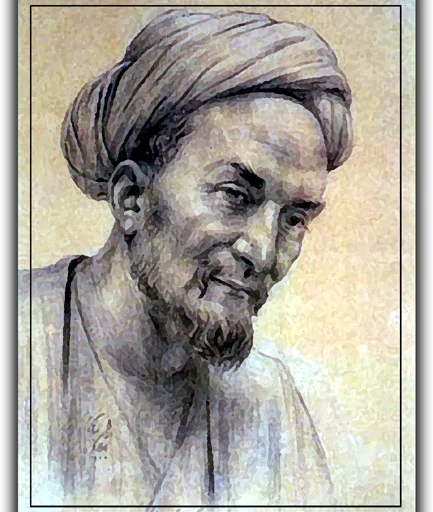
Abū-Muḥammad Muṣliḥ al-Dīn bin Abdallāh Shīrāzī, better known by his pen-name as Saʿdī or, simply, Saadi, was one of the major Persian poets of the medieval period. He is not only famous in Persian-speaking countries, but he has also been quoted in western sources. He is recognized for the quality of his writings, and for the depth of his social and moral thoughts. A native of Shiraz, his father died when he was an infant. Saadi experienced a youth of poverty and hardship, and left his native town at a young age for Baghdad to pursue a better education. As a young man he was inducted to study at the famous an-Nizzāmīya center of knowledge (1195–1226), where he excelled in Islamic Sciences, law, governance, history, Arabic literature and theology. The unsettled conditions following the Mongol invasion of Khwarezm and Iran led him to wander for 30 years abroad through Anatolia (he visited the Port of Adana, and near...
2 poezii, 0 proze
Pete Brown
(b 25 Dec. \'40, London) Poet, lyricist, singer, producer, percussionist. Active on London jazz-poetry scene early \'60s, then worked with Cream, writing lyrics for hits \'Sunshine Of Your Love\', \'White Room\', \'I Feel Free\', \'Politician\' etc which he said would pay the rent for the rest of his life. After Cream split \'68 he continued to work with Jack Bruce (see his entry), also his own Jazz Poetry \'66, A Meal You Can Shake Hands With In The Dark \'69 (as Pete Brown and His Battered Ornaments, Chris Spedding on guitar), Things May Come And Things May Go, But The Art School Dance Goes On Forever \'72, and Thousands On A Raft \'70 (as Pete Brown and Piblokto, with Jim Mullen). He worked with other groups; an album of demos by Back To The Front was later issued. He co-led Bond and Brown with Graham Bond \'72 (see Bond\'s entry); was part-time A&R and producer for Deram \'73--5; well-received poetry album The Not Forgotten Association \'73 had backing incl. Viv Stanshall on tuba....
1 poezii, 0 proze
PARADISE LOST -- Book VII
de John Milton
Book VII Descend from Heaven, Urania, by that name If rightly thou art called, whose voice divine Following, above the Olympian hill I soar, Above the flight of Pegasean wing! The meaning, not the...
The Afternoon of a Faun
de Stéphane Mallarmé
These nymphs I would perpetuate. So clear Their light carnation, that it floats in the air Heavy with tufted slumbers. Was it a dream I loved? My doubt, a heap of ancient night, is finishing In many...
The Poems of Sappho, Part III
de Sappho
The Poems of Sappho, Part III 44 Ge\'llws paidofilwte\'ra. More fond of children than Gello. Zenobius, about A.D. 130, quotes this as a proverb. The ghost of Gello was said by the Lesbians to pursue...
THE GRIFFIN
de Alina Mihai
I took the path of silence and of black night The sunlit world was far behind me The grass swayed gently in the moonlight And trees were tall, and starry sky And yet all these I could not see. On...
Hamlet
de William Shakespeare
HAMLET DRAMATIS PERSONAE (PAGINA 3) ACT I SCENE III A room in Polonius\' house. [Enter LAERTES and OPHELIA] LAERTES My necessaries are embark\'d: farewell: And, sister, as the winds give benefit And...
The Sphinx
de Oscar Wilde
In a dim corner of my room for longer than my fancy thinks A beautiful and silent Sphinx has watched me through the shifting gloom. Inviolate and immobile she does not rise she does not stir For...
At the mother's cross A face of an angel of childhood
de Laurențiu Nelu Rădoi
- - - - - - - - - - - - - - - - - - - - - - - - - Under the acacias bathed in dead winter's frost, Driven in the wheel of life by a windy March, The moon rises warm, but it's so far away The too...
Scrisoarea IV - vers Engleza
de Mihai Eminescu
See the tall and lonely castle mirrored in the placid lake, \'Neath those waters does its shadow through the ages never wake, Silently above the pine-tress rise its ancient rampart stark, Throwing...
Athanasia
de Oscar Wilde
To that gaunt House of Art which lacks for naught Of all the great things men have saved from Time, The withered body of a girl was brought Dead ere the world\'s glad youth had touched its prime, And...
TAKE THIS WALTZ
de Leonard Cohen
now in Vienna are ten pretty women there\'s a shoulder where death comes to cry there\'s a lobby with nine hundred windows there\'s a tree where the doves go to die there\'s a piece that was torn...