
"Is the first day of the rest of your life" – 11227 rezultate
0.04 secundeMeilisearch AC
ACAntonio Cisneros
The Peruvian poet and novelist Antonio Cisneros was born in Lima in 1942 where, from 1960 to 1964, he studied literature at the »Catholic University«. Later he undertook a PhD at the »San Marcos University«. He had already begun to publish his poems with much success in his first few years as a student. His volume of poetry »Destierro« came out in 1961 and is now regarded as among the classics of Latin-American lyric poetry. Early on he was still very much influenced by the Anglo-American beat-literature and inspired by its ironic gestures and its every-day sound. Later he turned more noticeably to political issues in order, so he emphasizes, to counteract the increasing political indifference in Latin-American society. The volume entitled »Comentarios reales de Antonio Cisneros« was aimed at the distortion of history by officials in his own country. The title, rich in associations, refers to the work of the first Castilian-writing Peruvian poet, Garcilaso de La Vega, also called »El...
1 poezii, 0 proze
 GA
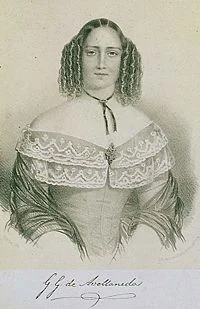
GAGertrudis Gómez de Avellaneda
Gertrudis Gómez de Avellaneda y Arteaga (March 23, 1814-February 1, 1873) was a Cuban writer of the 19th century. Born: March 23, 1814 Puerto Príncipe (modern day Camaguey), Cuba Died: February 1, 1873; Madrid, Spain Nationality Cuban Gertrudis Gómez de Avellaneda y Arteaga, widely known as la Avellaneda, was born in Puerto Príncipe (modern day Camaguey), Cuba. She came from a noble background; her father, Manuel Gomez de Avellaneda, was a descendent of the royal family of Navarre and aristocracy of Vizcaya of Spain, and also a commander of the Spanish navy in charge of the central regions of Cuba. Her mother, Francisca de Arteaga y Betancourt, was also from a wealthy Spanish family that had lived in Puerto Príncipe. It is said that her mother’s family is the one that inspired the family in her first novel, Sab. As a child la Avellaneda was not interested in feminine materials. She was given a tutor and soon became engulfed in the books she was given to read. Her mother tried...
0 poezii, 0 proze
 MP
MPMiodrag Pavloviæ
Miodrag Pavloviæ (Serbian Cyrillic: Миодраг Павловић; listen (help·info)) was born on 28 November 1928 in Novi Sad, Kingdom of Serbs, Croats and Slovenes. He went to school and university in Belgrade, where he studied medicine from 1947 until 1954, learned foreign languages, and wrote his first volume of poetry, 87 Poems. It appeared in 1952, the year the Yugoslav authorities, responding to a public address by the Croatian writer Miroslav Krleza, allowed more freedom of expression in politics and the arts. In 1960 Pavlovic was appointed director of drama at the People’s Theatre in Belgrade. He also worked for twenty years as editor for the leading publishing house of Prosveta. A theme occupying Pavlovic and many other intellectuals in the former Yugoslavia, Romania, Bulgaria, Macedonia, Greece and Albania, is the continuity between the ancient peoples of the Balkans and their modern-day...
3 poezii, 0 proze
Olly Komenda Soentgerath
Olly Komenda Soentgerath was born as German in Prague. She studied Germanistik and History at the Karl University. First poems appeared in the \"Prager day sheet\". In the Federal Republic of Germany she published so far ten poem volumes and a Prosaband. Seifert translated her poems into Czech and published them in three volumes in Prague two years before she received the 1984 Nobelprize. The poems of Olly Komenda Soentgerath were published in numerous anthologies, newspapers and magazines. They were toned and translated into several languages - the authoress is member of the PEN- club.She won several literary awards kept among others being the Culture Prize for Bibliography 1992 endowed by the Free State of Bavaria; the Honour Gift of Andreas Gryphius; and in 1996 the Kuenstlergilde endowed by the Federal Ministry of the Inside.
3 poezii, 0 proze
 AB
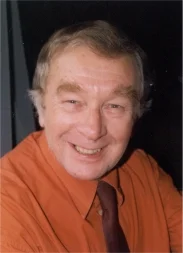
ABAlan Brownjohn
Alan Charles Brownjohn FRSL (born 28 July 1931) is an English poet and novelist. He was born in London and educated at Merton College, Oxford. He taught until 1979, when he became a full-time writer. He participated in Philip Hobsbaum's weekly poetry discussion meetings known as The Group. Alan Brownjohn is a Distinguished Supporter of the British Humanist Association. Works Travellers Alone (1954) poems The Railings (1961) poems To Clear the River (1964) novel, as John Berrington Penguin Modern Poets 14 (1965) with Michael Hamburger, Charles Tomlinson The Lions' Mouths (1967) A Day by Indirections (1969) broadsheet poem First I Say This: A Selection of Poems for Reading Aloud (1969) editor Sandgrains On A Tray (1969) Woman Reading Aloud (1969) broadsheet poem Synopsis (1970) Brownjohn's Beasts (1970) Transformation Scene (1971) broadside poem An Equivalent (1971) poem New Poems 1970 - 71. A P.E.N. Anthology of Contemporary Poetry (1971) edited with Seamus Heaney and Jon Stallworthy...
3 poezii, 0 proze
 DG
DGDavid Gascoyne
David Gascoyne (October 10, 1916 - November 25, 2001) was an English poet associated with the Surrealist movement. Gascoyne was born in Harrow and grew up in England and Scotland and attended Salisbury Cathedral School and Regent Street Polytechnic in London. He spent part of the early 1930s in Paris. His first book, Roman Balcony and Other Poems, was published in 1932, when he was sixteen. A novel, Opening Day, was published the following year. However, it was Man's Life is This Meat (1936), which collected his early surrealist work and translations of French surrealists, and Hölderlin's Madness (1938) that established his reputation. These publications, together with his 1935 A Short Survey of Surrealism and his work on the 1936 London International Surrealist Exhibition, which he helped to organise, made him one of a small group of English surrealists that included Hugh Sykes Davies and Roger Roughton. Ironically, at this exhibition, Gascoyne had to rescue Salvador Dalí from the...
5 poezii, 0 proze
 RD
RDRené Descartes
René Descartes (1596-1650) is one of the most important Western philosophers of the past few centuries. During his lifetime, Descartes was just as famous as an original physicist, physiologist and mathematician. But it is as a highly original philosopher that he is most frequently read today. He attempted to restart philosophy in a fresh direction. For example, his philosophy refused to accept the Aristotelian and Scholastic traditions that had dominated philosophical thought throughout the Medieval period; it attempted to fully integrate philosophy with the 'new' sciences; and Descartes changed the relationship between philosophy and theology. Such new directions for philosophy made Descartes into a revolutionary figure. The two most widely known of Descartes' philosophical ideas are those of a method of hyperbolic doubt, and the argument that, though he may doubt, he cannot doubt that he exists. The first of these comprises a key aspect of Descartes' philosophical method. As noted...
2 poezii, 0 proze
René Descartes
René Descartes (1596-1650) is one of the most important Western philosophers of the past few centuries. During his lifetime, Descartes was just as famous as an original physicist, physiologist and mathematician. But it is as a highly original philosopher that he is most frequently read today. He attempted to restart philosophy in a fresh direction. For example, his philosophy refused to accept the Aristotelian and Scholastic traditions that had dominated philosophical thought throughout the Medieval period; it attempted to fully integrate philosophy with the \'new\' sciences; and Descartes changed the relationship between philosophy and theology. Such new directions for philosophy made Descartes into a revolutionary figure. The two most widely known of Descartes\' philosophical ideas are those of a method of hyperbolic doubt, and the argument that, though he may doubt, he cannot doubt that he exists. The first of these comprises a key aspect of Descartes\' philosophical method. As...
0 poezii, 0 proze
 EM
EMEdwin Morgan
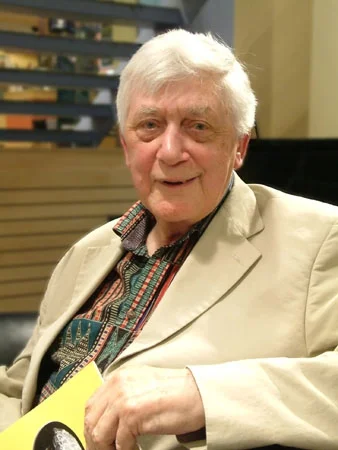
Edwin George Morgan OBE (born 27 April 1920) is a Scottish poet and translator who is associated with the Scottish Renaissance. He is widely recognised as one of the foremost Scottish poets of the 20th century. In 1999, Morgan was made the first Glasgow Poet Laureate. In 2004, he was named as the first Scottish national poet: The Scots Makar. Morgan was born in Glasgow and grew up in Rutherglen. He entered the University of Glasgow in 1937 and, after interrupting his studies to serve in World War II as a non-combatant conscientious objector with the Royal Army Medical Corps, graduated in 1947 and became a lecturer at the University. He worked there until his retirement in 1980. He came out as gay in Nothing Not Giving Messages: Reflections on his Work and Life , but explored his sexuality in many previous works.[1] He had written many famous love poems, among them "Strawberries" and "The Unspoken", in which the love object was not gendered; this was partly because of legal problems at...
1 poezii, 0 proze
 IM
IMIohann Mayer
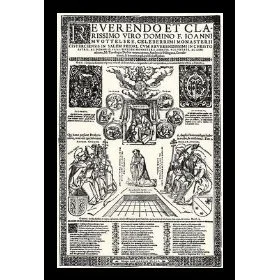
An emissary of the Queen Christina of Sweden to the khan of the Tartars Islam Giray the 3rd, Iohann Mayer made a journey through Moldavia during May 1651. He was sent to accompany the Tartar messenger who had brought to the queen the letter of the khan that contained proposals of common operation against Poland and he was to hand over to the khan the answer of the queen as well. He passed through The White Citadel for the first time in December 1650 on his way towards Crimea. Now, in the summer of the next year, he was coming back on the same route and was finding again the same boatmen he had used six months earlier, on leaving. One cannot be aware of any other details of his winter journey towards Crimea, no other details about his itinerary through Moldavia he is most likely to have used to make his way to the khan` s court. His journey diary is preceded with the words: These are those that happened and occurred during my journey to Bakhchisaray and during the period I spent there,...
1 poezii, 0 proze
Is the first day of the rest of your life
de Traian Rotărescu
Presupunând existența îngerilor, Ei s-ar uita la videoclipurile preferate? Sigur, dacă videoclipurile ar intra in sfera procupărilor lor. Oameni...femei. Femei...oameni. Sex, love...durex, nume,...
Două roți
de dorinMOLDOVEANU
VLAD – 19 ani, atletic LIVIU – 26 de ani, ras in cap. VLAD si LIVIU sunt frati, seamana unul cu celalalt. Detaliu de poster lipit pe usa: “This is the first day of the rest of your life.” Pe usa...
Dracula
de Bram Stoker
Chapter 16 - Dr. Seward\'s Diary It was just a quarter before twelve o\'clock when we got into the churchyard over the low wall. The night was dark, with occasional gleams of moonlight between the...
THE ANTICHRIST
de Friedrich Nietzsche
THE ANTICHRIST by Friedrich Nietzsche Published 1895 translation by H.L. Mencken Published 1920 PREFACE This book belongs to the most rare of men. Perhaps not one of them is yet alive. It is possible...
The Afternoon of a Faun
de Stéphane Mallarmé
These nymphs I would perpetuate. So clear Their light carnation, that it floats in the air Heavy with tufted slumbers. Was it a dream I loved? My doubt, a heap of ancient night, is finishing In many...
PARADISE LOST -- Book X
de John Milton
Book X Mean while the heinous and despiteful act Of Satan, done in Paradise; and how He, in the serpent, had perverted Eve, Her husband she, to taste the fatal fruit, Was known in Heaven; for what...
PARADISE LOST -- Book VIII
de John Milton
Book VIII The Angel ended, and in Adam\'s ear So charming left his voice, that he a while Thought him still speaking, still stood fixed to hear; Then, as new waked, thus gratefully replied. What...
PARADISE LOST -- Book I
de John Milton
Book I Of Man\'s first disobedience, and the fruit Of that forbidden tree whose mortal taste Brought death into the World, and all our woe, With loss of Eden, till one greater Man Restore us, and...
Dialogue Between a Priest and a Dying Man (1782)
de Donatien Alphonse François, marquis de Sade
PRIEST - Come to this the fatal hour when at last from the eyes of deluded man the scales must fall away, and be shown the cruel picture of his errors and his vices - say, my son, do you not repent...
Ash Wednesday
de T.S. Eliot
I Because I do not hope to turn again Because I do not hope Because I do not hope to turn Desiring this man\'s gift and that man\'s scope I no longer strive to strive towards such things (Why should...