
"Aphorisms" – 8 rezultate
0.00 secundeMeilisearch KI
KIKeiko Imaoka
Beginner\'s Mind (Keiko Imaoka - Tucson, Arizona) I cannot be sure when I first became aware of haiku and tanka in my childhood in Japan. They seemed to have existed for a long time in the perimeter of my awareness, undifferentiated from proverbs, mottoes, aphorisms, and song lyrics that were phrased in similar forms. Sometime during my grade school years, \"Ogura Hyakunin-Isshu\" (\"Ogura Collection of One Hundred Tanka\", edited by Teika Fujiwara around 1235) became known to me as a New Year\'s card game, in which players compete to capture shimonoku cards (100 cards on each of which the last half of a verse is printed, spread out on the floor in front of the players) that finish the verses being read aloud. At abacus school, where we played this game at every new year\'s party, my prowess in the game improved dramatically when I was in the sixth grade, after I had memorized all the poems with my tenth-grade sister who was required to do so in her archaic grammar course in school. I...
1 poezii, 0 proze
 SL
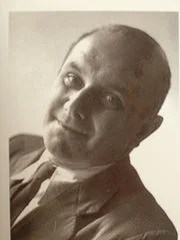
SLStanis³aw Jerzy Lec
Stanis³aw Jerzy Lec (6 March 1909 – 7 May 1966) (born Baron Stanis³aw Jerzy de Tusch-Letz) was a Polish poet and aphorist of Polish and Jewish noble origin. Often mentioned among the greatest writers of post-WW2 Poland, he was one of the most influential aphorists on the 20th century. Lyrical poetry, sceptical philosophical-moral aphorisms, often with a political subtext. He was born on March 6, 1909 in Lviv (then Lemberg, Austro-Hungarian Empire), the son of the Baron Benon de Tusch-Letz and Adela Safrin. The family moved to Vienna at the onset of First World War, and Lec' early education was received there. After the war the family returned to Lviv-Lemberg to continue his schooling at the Lemberg Evangelical School. In 1927 he matriculated at the Lviv's Jan Kazimir University in jurisprudence and Polish. As a result of his political activities — writing articles for socialist revolutionary periodicals, making speeches in the Technological Institute’s Yellow Hall — Lec had to leave...
1 poezii, 0 proze
 AF
AFAnatole France
Anatole France, pseudonym for Jacques Anatole Thibault (1844-1924), was the son of a Paris book dealer. He received a thorough classical education at the Collège Stanislas, a boys\' school in Paris, and for a while he studied at the École des Chartes. For about twenty years he held diverse positions, but he always had enough time for his own writings, especially during his period as assistant librarian at the Senate from 1876 to 1890. His literary output is vast, and though he is chiefly known as a novelist and storyteller, there is hardly a literary genre that he did not touch upon at one time or another. France is a writer in the mainstream of French classicism. His style, modelled on Voltaire and Fénélon, as well as his urbane scepticism and enlightened hedonism, continue the tradition of the French eighteenth century. This outlook on life, which appears in all his works, is explicitly expressed in collection of aphorisms, Le Jardin d\'Épicure (1895) [The Garden of...
6 poezii, 0 proze
 KK
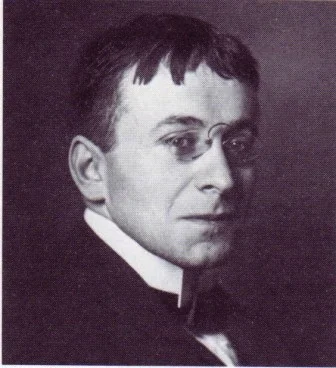
KKKarl Kraus
Karl Kraus *28.04.1874, Jitschin/Böhmen - †12.06.1936, Wien Karl Kraus war der Sohn eines jüdischen Papierfabrikanten. Er kam 1877 nach Wien und studierte ebenda Jura und Philosophie, nach anderen Quellen auch Germanistik. Er versuchte sich als Schauspieler, Journalist und Literaturkritiker. 1899 rief er die legendäre Zeitschrift „Die Fackel“ ins Leben, die er bis zu seinem Tode selbst gestalten sollte. Karl Kraus verfügte über eine ausgeprägte polemisch-satirische Begabung, die er in seiner radikal aggressiven Kulturkritik einsetzte. Er schuf aber auch literarische Werke: dramatische Satiren, Aphorismen, Essays, Gedichte, Epigramme und, als wohl bekanntestes Werk, das Antikriegsdrama „Die letzten Tage der Menschheit“ (1919), in dem er den Untergang der österreichischen Vorkriegsgesellschaft thematisiert. Bibliographie (Auszüge): Die demolierte Literatur, Essays, 1896; Sittlichkeit und Kriminalität, Essays, 1908; Sprüche und Widersprüche, Aphorismen, 1909; Epigramme, 1927;...
1 poezii, 0 proze
Michel Camus
Ziarist , animator de reviste si de colectii de carti , editor , producator de emisiuni radio , a consacrat mai multa energie altora decit lui insusi . Dar in acelasi timp , totul se armoniza , tindea spre acelasi scop in acest spirit curios , pasionat de spiritualitate , de ezoterism si de filosofie . Gusturile si interesele sale se uneau cu cele ale autorilor pe care ii iubea sau pe care ii publica , de la Sade la Raymond Abellio , de la Rene Daumal la Roberto Juanoz , Adonis si Christian Bobin . Cartile lui Michel Camus sint marturia unei cercetari in care poezia devine drum al cunoasterii , luind-o adesea pe caile aforismului . Poezia , credea el , este o cale de apropiere de acest > caruia misticile tuturor religiilor au incercat sa-i traseze harta . Citam \"Paraphrases Heretiques\"(1983) , \"Proverbes du silence et de l`emerveillement\"(1989) sau , mai recent , \"Aphorismes sorciers\"(1996) si \"Adonis le visionnaire\"(2000). (apud Patrik Kechian)
2 poezii, 0 proze
 RS
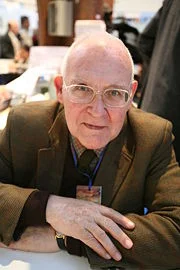
RSRobert Sabatier
A condus revista literară "La Cassette", unde au colaborat marii poeți ai vremii, printre care și Eluard. Membru al Academiei Goncourt. A obținut Marele Premiu al Poeziei, acordat de Academia Franceză, Premiul Antonin Artaud, Premiul Apollinaire. Romane - "Alain et le Nègre", "Le Marchand de sable", "Le Coût de la cendre", "Boulevard", "Canard au sang", "Les Allumettes suédoises". Poezii - "Les Fêtes solaires", "Dédicace d'un navire", "Les Poisons délectable", "Les Chateaux de millions d'années". ******* Robert Sabatier né le 17 août 1923 à Paris est un écrivain et poète français. Il a écrit des romans, et des essais, des recueils d'aphorismes et de poésies. Élu à l'Académie Goncourt en 1971, ainsi qu'à l'Académie Mallarmé. Il est l'auteur d'une Histoire de la Poésie française. Elevé à Montmartre, puis dans le quartier du Canal Saint-Martin, il a raconté son enfance dans les séries du "roman d'Olivier", dont les Allumettes Suédoises, porté...
1 poezii, 0 proze
Aforism
de gheorghe Sarbu
Aforism : Cine face rau geniului nu-si iubeste copiii./ Sârbu Aphorism: Whoever does harm to the genius does not love his children./ Sârbu Aphorisme: Celui qui fait mal au génie n’aime pas ses...
AFORISM, aforisme, s.n. = Cugetare enunțată într-o formă concisă, memorabilă; maximă, sentință, adagiu. – Din fr. aphorisme, lat. aphorismus. eu ti-as sugera sa te mai gandesti. atat la definitie cat ...
la Aforisme de duzină - ep. 4 de Cosmin Soameș