
"...that was one thousand and one strike!" – 3226 rezultate
0.03 secundeMeilisearch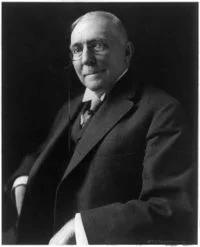 JR
JRJames Whitcomb Riley
Born October 7, 1849, Greenfield,Indiana, US Died July 22, 1916 (aged 66)Indianapolis, Indiana, US James Whitcomb Riley (October 7, 1849 – July 22, 1916) was an American writer and poet. Known as the "Hoosier Poet", "National Poet" and the "Children's Poet," [2] he started his career during 1875 writing newspaper verse in Indiana dialect for the Indianapolis Journal. His verse tended to be humorous or sentimental, and of the approximately one-thousand poems that Riley published, over half are in dialect. Claiming that “simple sentiments that come direct from the heart”[1] were the reason for his success, Riley vended verse about ordinary topics that were "heart high. "Riley was a bestselling author during the early 1900s and earned a steady income from royalties; he also traveled and gave public readings of his poetry. His favorite authors were Robert Burns and Charles Dickens, and Riley himself befriended bestselling Indiana authors such as Booth Tarkington, George Ade and Meredith...
0 poezii, 0 proze
G.K. Chesterton
Gilbert Keith Chesterton was born in London, England on the 29th of May, 1874. Though he considered himself a mere \"rollicking journalist,\" he was actually a prolific and gifted writer in virtually every area of literature. A man of strong opinions and enormously talented at defending them, his exuberant personality nevertheless allowed him to maintain warm friendships with people-- such as George Bernard Shaw and H. G. Wells--with whom he vehemently disagreed. Chesterton had no difficulty standing up for what he believed. He was one of the few journalists to oppose the Boer War. His 1922 Eugenics and Other Evils attacked what was at that time the most progressive of all ideas, the idea that the human race could and should breed a superior version of itself. In the Nazi experience, history demonstrated the wisdom of his once \"reactionary\" views. His poetry runs the gamut from the comic The Logical Vegetarian to dark and serious ballads. During the dark days of 1940, when Britain...
2 poezii, 0 proze
 KT
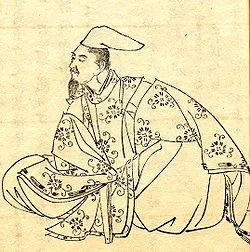
KTKi No Tsurayuki
Poet (waka) japonez din era Heian. A trăit (probabil) între anii 872 și 945. *** Ki no Tsurayuki (872-945) was a Japanese author, poet and courtier of the Heian period. Tsurayuki was a son of Ki no Mochiyuki. He became a waka poet in the 890s. In 905, under the order of Emperor Daigo, he was one of four poets selected to compile the Kokin Wakashū, an anthology of poetry. After holding a few offices in Kyoto, he was appointed the provincial governor of Tosa province and stayed there from 930 until 935. Later he was presumably appointed the provincial governor of Suo province, since it was recorded that he held a waka party (Utaai) at his home in Suo. He is well-known for his waka and is counted as one of the Thirty-six Poetry Immortals selected by Fujiwara no Kinto. He was also known as one of the editors of the Kokin Wakashū. Tsurayuki wrote one of two prefaces to Kokin Wakashū; the other is in Chinese. His preface was the first critical essay on waka. He wrote of its...
1 poezii, 0 proze
 LH
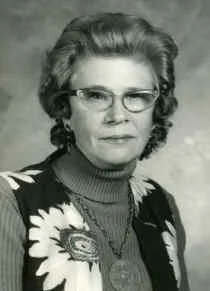
LHLorraine Ellis Harr
Lorraine Ellis Harr was one of the important figures in the history of American haiku. She lived in Portland, Oregon, where for almost four decades she worked tirelessly to promote the understanding of the haiku form and to encourage the reading and writing of haiku in English through the publication of a quarterly journal, Dragonfly, the organization, Western World Haiku Society and the fifteen books of her own poems in all the Japanese genres . Internationally known poet and editor, Kazuo Sato once commented that if Lorraine Ellis Harr lived in Japan, she would be a national treasure. Opal Lorraine Ellis Harr was born on Halloween, October 31, 1912, in Sullivan, Illinois. Her father left the family when she was three years old. The mother and three girls (Lorraine is the youngest) moved to Cooperstown, North Dakota to live for several years before moving to Portland. Her mother had a sister who lived there. The sister's husband promised Lorraine's mother a job if they moved to...
4 poezii, 0 proze
Radu Contes
The beginning of my childhood was profoundly marked by one of my grandfather’s passions – literature. For him reading, living, the writings of so many did not seem to be enough, so he began writing his own stories that still echo in my memory and in my heart. I remember that one day I went to him and asked “What are you writing about?”. Looking at me for only a second and returning his eyes at the ink stained notebook he answered: “My life”. Regretful, I confess that that was the last dialogue we had. After that I began reading, reading everything he was writing. Two years after his death, I had met someone who changed everything. I stopped reading and began writing myself. It was such a new feeling. It seemed to be never ending. It still feels. Since the first time, you may think I am exaggerating, but it really was the first time I saw her when I felt this sudden urge of writing. Words like “Thank you” seem meaningless compared to the things that you have done for me.
2 poezii, 0 proze
 JK
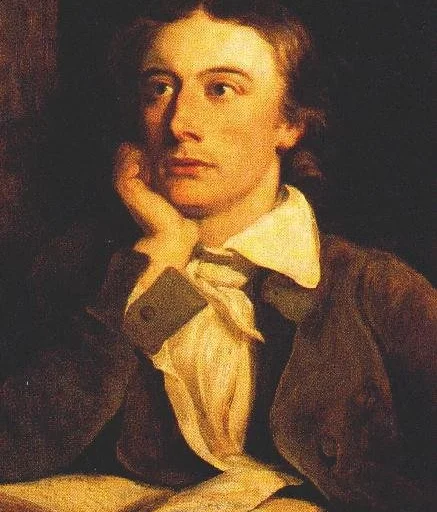
JKJohn Keats
John Keats was born on 31 October 1795 (probably), first child of Thomas Keats and Frances Jennings Keats, who had apparently eloped1. Everything was pretty ordinary for all concerned for a while--the Keatses had three more sons (George and Thomas, plus Edward who died as a baby) and one daughter, Frances, by 1803. That was also the year when John went away to school at Enfield. In 1804, John\'s father was killed in a fall from a horse. Just over two months later, for mysterious reasons, Frances remarried, to a London bank clerk named William Rawlings. Frances quickly decided she\'d made some sort of terrible error and left, taking nothing with her since the laws of the time decreed that all her property and even her children belonged to her husband. Frances\' mother, Alice, swept in and took custody of the children, but she could do nothing about the Swan and Hoop, which Rawlings sold immediately before disappearing. It was around this time that John became prone to fistfights, which...
32 poezii, 0 proze
 RS
RSRobert Sheckley
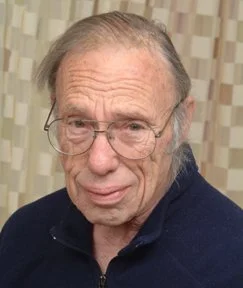
Robert Sheckley, born in 1928, grew up in New Jersey and served in Korea before selling his first story in 1951. A master of satire and irony whose work has been called \"galactic humor,\" Sheckley was one of the first to portray gadgets that think for humans, such as intelligent refrigerators. Among his classic stories are \"Shape\", \"Specialist\", \"Seventh Victim\", and \"Warm\" (all 1953), \"The Prize of Peril\" (1958), \"The Store of the Worlds\" (1959), \"The People Trap\" (1968), and \"Can You Feel Anything When I Do This?\" (1969); \"Shall We Have a Little Talk?\" (1965) and \"What Is Life?\" (1976) were Nebula and World Fantasy award nominees respectively. Early story collections Untouched by Human Hands (1954), Citizen in Space (1955), and Pilgrimage to Earth (1957) were followed by others in the \'60s and \'70s, with retrospective The Collected Short Fiction of Robert Sheckley published in 5 volumes in 1991. Sheckley\'s first novel Immortality Inc. (1959) was an expanded...
0 poezii, 0 proze
John Keats
John Keats John Keats (October 31, 1795 – February 23, 1821) was one of the principal poets of the English Romantic movement. During his short life, his work received constant critical attacks from the periodicals of the day, though politics, rather than aesthetics, often dictated those opinions. By the mid-nineteenth century, however, audiences began to appreciate more fully the significance of the cultural change his work both presaged and helped to form. Elaborate word choice and sensual imagery characterize Keats' poetry. He often felt himself working in the shadow of past poets, particularly Milton and Spenser, and only towards the end of his life produced his most original and most memorable poems, including a series of odes that remain among the most popular poems in English. Oscar Wilde, the aestheticist non pareil was to later write: "[...] who but the supreme and perfect artist could have got from a mere colour a motive so full of marvel: and now I am half enamoured of the...
0 poezii, 0 proze
 BP
BPBrian Patten
Brian Patten was born in 1946 in Liverpool, and grew up in the docklands. He left school at fifteen, becoming a junior reporter on The Bootle Times, with responsibility for writing the popular music column. One of his first pieces included a report about McGough and Henri. This led on to him producing and editing the magazine Underdog, which gave a platform to the underground poets in Liverpool at that time. His own work came fully to public attention with the publication of Little Johnny\'s Confession in 1967, when he was twenty-one years old. Since then he has written numerous adult poetry collections, including Vanishing Trick (1976) Armada (1996), which includes some of his most striking poems, focusing on the death of his mother and his memories of childhood. Penguin recently published his Selected Poems (February 2007), and at the same time Harper Perennial published one of his most important books, The Collected Love Poems. Patten is also well-known for his best-selling poetry...
4 poezii, 0 proze
 WA
WAWerner Aspenstrom
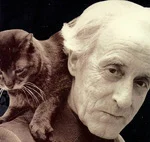
Karl Werner Aspenström (13 November 1918 – 25 January 1997) was a Swedish poet. Born at Norrbärke, he was a member of the Swedish Academy, where he held Seat 12 from 1981 to 1997. Aspenström claimed that his motivation for writing was "writing for his cat", but apparently hinted that he meant someone else with that. In 1989, together with Lars Gyllensten and Kerstin Ekman, he resigned from the Swedish Academy because of the academy’s response to the Salman Rushdie controversy, which was perceived as weak. He however claimed that this was not the sole reason for his resignation, but rather one amongst several other. He was a friend of Stig Dagerman. Works Förberedelse (1943) Oändligt är vårt äventyr (1945) Snölegend (1949) Varelser (1989) Öva Sitt Eget (2004) (posthumous, co-written with Signe Lund-Aspenström)
1 poezii, 0 proze
Venus and Adonis
de William Shakespeare
\'Vilia miretur vulgus; mihi flavus Apollo Pocula Castalia plena ministret aqua.\' To the Right Honourable Henry Wríothestly, EARL OF SOUTHAMPTON, AND BARON OF TICHFIELD. RIGHT HONOURABLE, I know not...
The Sphinx
de Oscar Wilde
In a dim corner of my room for longer than my fancy thinks A beautiful and silent Sphinx has watched me through the shifting gloom. Inviolate and immobile she does not rise she does not stir For...
Necronomikon
de Abdul al-Hazred
THE TESTIMONY OF MAD ARAB THIS is the testimony of all that I have seen, and all that I have learned, in those years that I have possesed the Three Seals of MASSHU. I have seen One Thousand and-One...
Gerontion
de T.S. Eliot
Thou hast nor youth nor age But as it were an after dinner sleep Dreaming of both. HERE I am, an old man in a dry month, Being read to by a boy, waiting for rain. I was neither at the hot gates Nor...
letter-thaughts
de petrut marinescu
I was thinking about you last night.About what we\'re talking,about whatwe\'re dreaming,about how our lives are.Some of my thaughts are the same as yours and that makes me feel close to you.Some of...
De Padre Vostro
de A. Robert Mario
It was a long time ago... When ? i can’t remember It was in a time when Kings never surrender In times of Knights,only the bloody moon knows theyr story When mountains and rivers were moved by love,...
Ballad of the Goodly Fere
de Ezra Pound
Simon Zelotes speaketh it somewhile after the Crucifixion Ha\' we lost the goodliest fere o\' all For the priests and the gallows tree? Aye lover he was of brawny men, O\' ships and the open sea....
A lover\'s complaint
de William Shakespeare
FROM off a hill whose concave womb re-worded A plaintful story from a sistering vale, My spirits to attend this double voice accorded, And down I laid to list the sad-tun\'d tale; Ere long espied a...
THE ANTICHRIST
de Friedrich Nietzsche
THE ANTICHRIST by Friedrich Nietzsche Published 1895 translation by H.L. Mencken Published 1920 PREFACE This book belongs to the most rare of men. Perhaps not one of them is yet alive. It is possible...
PARADISE LOST -- Book VI
de John Milton
Book VI All night the dreadless Angel, unpursued, Through Heaven\'s wide champain held his way; till Morn, Waked by the circling Hours, with rosy hand Unbarred the gates of light. There is a cave...